

Wholesale Grounding Rods for Reliable Electrical Grounding Systems
Grounding Rod is a core vertical grounding component used in lightning protection, equipment antistatic protection, and electrical safety grounding systems. It is widely applied in infrastructure, renewable energy, power engineering, and industrial projects. Installed deep into the soil, the Grounding Rod creates a reliable current dissipation path that safely directs lightning surge currents, equipment fault currents, and static charges into the earth, helping stabilize system potential and improve electrical safety.
Saint Ni Lightning Protection is a professional manufacturer specializing in lightning protection and grounding materials. With years of experience in grounding product manufacturing, we control the entire production process from raw material selection and processing to final inspection. Our factory supplies stable-quality grounding solutions for global customers, including grounding electrodes, connection accessories, and complete grounding system components.
Manufactured with high-quality conductive materials and advanced corrosion protection technology, the Grounding Rod provides excellent conductivity, stable current dissipation, and long-term low grounding resistance. The product features strong mechanical strength, high resistance to bending and deformation, and reliable performance in different soil conditions, including rocky areas, dry regions, and coastal environments with high salt content.
Key Indicators
Materials
Available materials include copper, steel, zinc, stainless steel, brass, rare earth alloys, and graphene-based conductive materials. Different materials can be selected according to soil conditions, corrosion requirements, and project specifications.
Packaging Specifications
Length, diameter, surface treatment, and packaging methods can be customized according to customer requirements. Standard and customized sizes are available for different grounding applications.
Storage Stability
Products should be stored in a dry and well-ventilated warehouse environment to maintain surface protection performance and product quality before installation.
Advantages
Stable Resistance Reduction
The Grounding Rod penetrates deep into underground soil layers, reducing the influence of surface moisture changes and maintaining stable grounding performance even in dry seasons.
Fast Current Dissipation
The conductive structure enables rapid transmission of lightning currents and fault leakage currents into the earth, improving system protection and operational safety.
Easy Installation
The vertical installation design requires less excavation work compared with traditional grounding methods, reducing construction difficulty and improving installation efficiency.
Compact Installation Space
The Grounding Rod requires limited installation space, making it suitable for projects where land availability is restricted.
Flexible Extension
Multiple rods can be connected or extended according to soil conditions and grounding requirements, providing flexible solutions for different engineering environments.
Wide Applications
The product is commonly used in photovoltaic systems, communication towers, buildings, power facilities, railway systems, and other grounding projects.
Applications
1. Electric Power and Energy
Used in power plants, hydropower stations, wind farms, photovoltaic projects, transmission lines, and substations. The Grounding Rod provides reliable lightning protection and grounding for plant areas, tower structures, transformers, and high-voltage equipment, including projects located in high-resistance or salt-corrosion soil environments.
2. Petrochemical and Hazardous Chemical Industry
Applied in petroleum plants, chemical facilities, and storage tank areas. The grounding system helps safely discharge lightning currents and prevent potential electrical hazards in flammable and explosive environments.
3. Transportation Infrastructure
Suitable for airports, high-speed rail systems, and transportation facilities. It provides stable grounding protection for navigation equipment, signaling systems, and other critical electrical installations.
4. Communication and Data Facilities
Used for communication base stations, server rooms, and network facilities. The Grounding Rod helps protect sensitive equipment from surge damage and supports equipotential bonding systems.
FAQ
Q1: What area can one Grounding Rod cover?
There is no fixed coverage area for a single Grounding Rod. The actual grounding effect depends mainly on soil resistivity, installation depth, surrounding soil conditions, and system design. Ground resistance testing should be carried out after installation.
Q2: How long is the service life?
The service life depends on installation conditions, especially soil acidity, alkalinity, and corrosion levels. In suitable environments with proper protection treatment, the Grounding Rod can maintain stable performance for many years.
Company Strength and Cooperation Prospects
Professional Manufacturing Capability
Saint Ni Lightning Protection produces grounding products with strict quality control throughout material selection, manufacturing, and inspection processes. The Grounding Rod features excellent mechanical strength, reliable conductivity, and stable grounding resistance after long-term underground installation.
Complete Grounding Solutions
With various specifications and customization options, Saintni provides grounding rods, grounding wires, connection accessories, resistance-reducing materials, and related components for different engineering projects.
Global Project Support
The products are widely used in building lightning protection, distribution rooms, solar power plants, communication stations, industrial facilities, and outdoor electrical installations. Saintni supports different order quantities with reliable production capacity and stable delivery schedules.
- View as
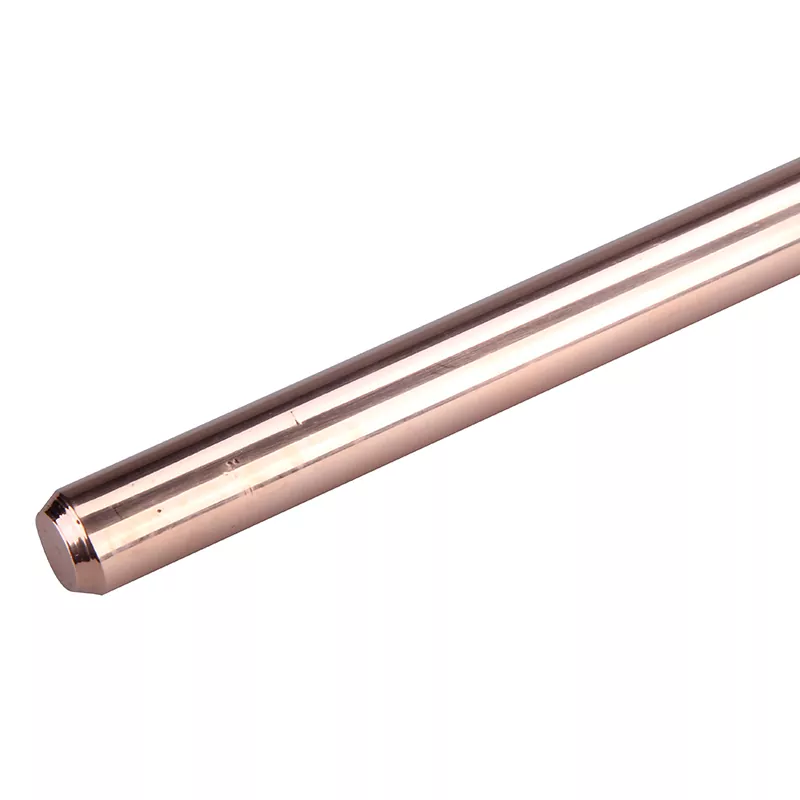
Copper Bonded Grounding Rod No Thread Type
Saint Ni Lightning Protection Copper Bonded Grounding Rod No Thread Type is a professional grounding electrode designed for large-scale lightning protection and earthing projects. Manufactured with a high-purity electrolytic copper layer bonded to a low-carbon steel core, it combines excellent electrical conductivity with strong mechanical performance. The threadless structure eliminates coupling accessories, reduces installation procedures, and lowers transportation damage risks.

Copper Bonded Grounding Rod Threaded Type
Saint Ni Lightning Protection Copper Bonded Grounding Rod Threaded Type is designed for reliable lightning protection and electrical grounding applications. Featuring a high-strength steel core with a high-purity copper bonded layer, it provides excellent conductivity, corrosion resistance, and mechanical durability. The threaded connection design allows flexible extension with matching couplers, making it suitable for power systems, communication facilities, industrial projects, and renewable energy grounding applications.

Knurled Copper Bonded Steel Grounding Rod
Saint Ni Lightning Protection Knurled Copper Bonded Steel Grounding Rod is an innovative grounding electrode combining a high-strength steel core with a high-purity copper bonded layer. Featuring a unique knurled surface and connector-free insertion design, it improves soil grip, current dissipation, and installation efficiency. With excellent conductivity, corrosion resistance, and long-term grounding stability, it is widely used in lightning protection, power systems, communication facilities, renewable energy projects, and industrial grounding applications.
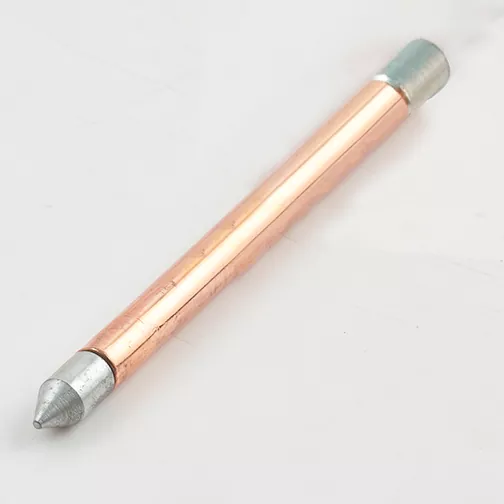
Internal Thread Copper Bonded Ground Rod
Saint Ni Lightning Protection Internal Thread Copper Bonded Ground Rod is a high-performance grounding electrode designed for long-term underground grounding applications. Featuring a protected internal thread connection structure, it prevents thread damage during transportation and installation while improving joint durability and grounding stability. Combined with a high-strength steel core and high-purity copper bonded layer, it provides excellent conductivity, corrosion resistance, and mechanical strength for power systems, renewable energy projects, communication facilities, and lightning protection applications.

Galvanized Steel Grounding Rod Electrode
Saint Ni Lightning Protection Galvanized Steel Grounding Rod Electrode is an economical grounding solution for standard lightning protection and electrical grounding projects. Manufactured with a strong steel core and hot-dip galvanized coating, it provides reliable conductivity, corrosion protection, and easy installation. Available in smooth and threaded types, it is widely used in residential, commercial, power, and infrastructure grounding applications.

Hot Dip Galvanized Ground Rod for Earthing System
Saint Ni Lightning Protection Hot Dip Galvanized Ground Rod for Earthing System is a practical and economical grounding electrode designed for standard earthing and lightning protection projects. Manufactured from solid Q235 steel with a uniform hot-dip galvanized coating, it provides reliable mechanical strength, stable grounding performance, and convenient installation. Available in multiple sizes and connection options, it is widely used in residential, industrial, power, and infrastructure grounding systems.
Saint Ni Lightning Protection is a professional Grounding Rod manufacturer and supplier in China. We have an experienced sales team, professional technicians, and an after-sales service team.


