Why It Shouldn’t Be Overlooked in a Grounding System
In a complete grounding and lightning protection system, every component plays an important role. Among them, the Grounding Connector is often considered a small accessory, but it directly affects the reliability, conductivity, and long-term safety of the entire grounding system.
A grounding connector works as the “joint” of the grounding system. It securely connects different grounding components, including grounding rods, copper busbars, grounding cables, flat steel, equipment enclosures, and steel structures, creating a continuous low-resistance current path.
During lightning strikes or electrical faults, a reliable grounding connector ensures that excessive current can be safely conducted into the earth, helping protect equipment, facilities, and personnel.
What Are the Main Types of Grounding Connectors?
According to different installation methods and application requirements, grounding connectors are mainly divided into the following categories:
1. Exothermic Welding System
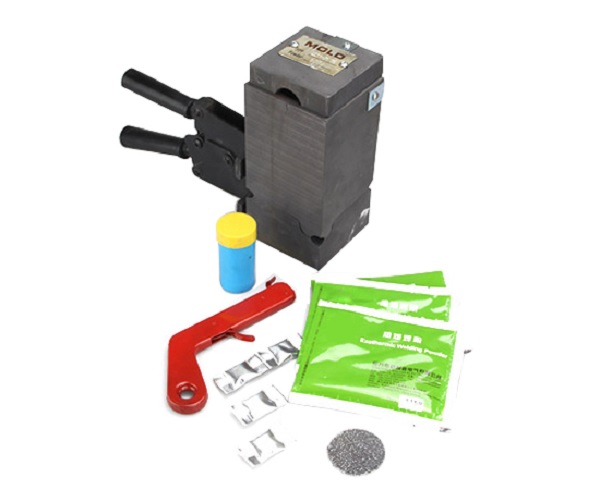
Exothermic Welding System creates a permanent molecular bond between grounding conductors through a high-temperature chemical reaction.
Compared with traditional mechanical connections, exothermic welding provides excellent electrical conductivity, strong mechanical strength, and long-term corrosion resistance.
It is widely used in:
- Lightning protection grounding systems
- Power substations
- Industrial facilities
- Railway grounding projects
- Communication tower grounding
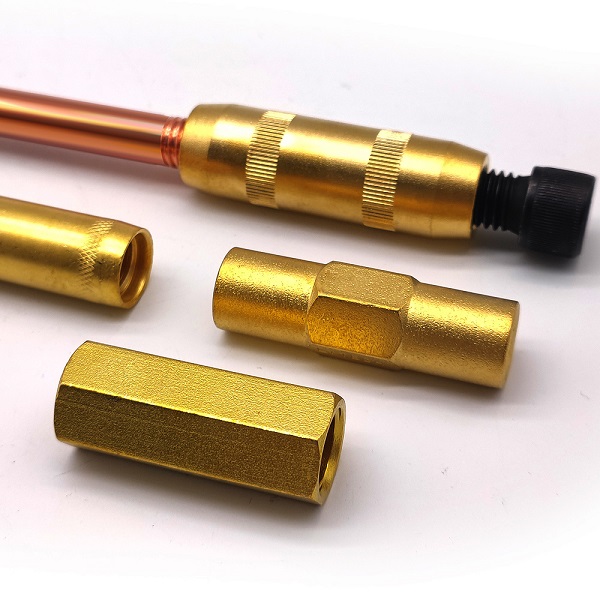
2. Ground Rod Connector
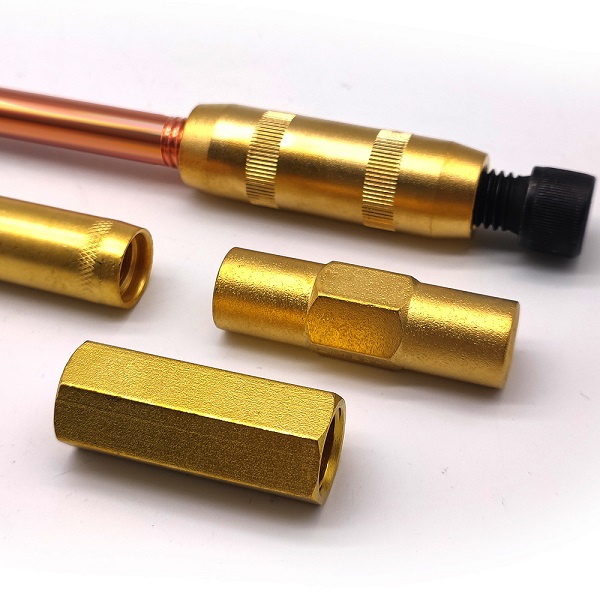
Ground Rod Connector is designed to connect grounding rods with conductors, extending grounding systems and improving installation flexibility.
A high-quality ground rod connector should provide:
- Stable mechanical connection
- Excellent electrical performance
- Corrosion resistance
- Long service life in underground environments
3. Grounding Cable Clamp
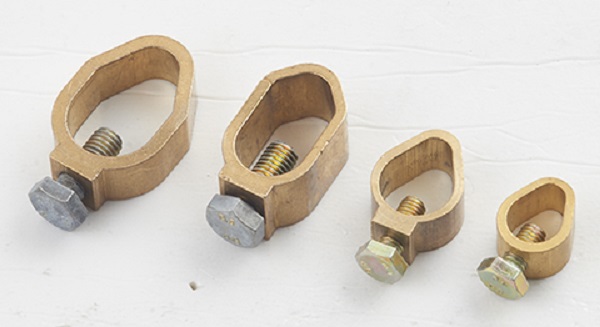
Grounding Cable Clamp is commonly used for connecting grounding cables, copper conductors, flat steel, and other grounding components.
It provides a convenient mechanical connection method and is widely applied in residential, commercial, and industrial grounding installations.
What Should Be Considered When Selecting a Grounding Connector?
Choosing the correct grounding connector is essential for maintaining the safety and reliability of a lightning protection and grounding system. The following factors should be carefully considered.
1. Material Selection: Balance Conductivity and Corrosion Resistance
The material of a grounding connector directly affects electrical performance and service life.
Common materials include:
- Copper: Excellent electrical conductivity
- Tinned copper: Improved corrosion resistance
- Stainless steel: Suitable for harsh environments
- Galvanized steel: Cost-effective protection against corrosion
The appropriate material should be selected according to soil conditions, installation environment, and expected service life.
2. Connection Method: Choose the Right Technology for the Application
Grounding connectors can generally be divided into two connection methods:
- Mechanical Connection: Uses clamps, bolts, or connectors for flexible installation and maintenance.
- Exothermic Welding Connection: Creates a permanent connection with excellent conductivity and durability.
The selection depends on project requirements, environmental conditions, and maintenance expectations.
3. System Compatibility: Match the Complete Grounding Solution
A grounding connector should not be selected as an independent component. It must work together with the entire grounding system, including grounding rods, conductors, grounding cables, and lightning protection equipment.
Proper system matching helps ensure reliable current transmission and long-term performance.
4. Specification Matching: Ensure Accurate Installation
Correct sizing is critical for a reliable grounding connection.
The connector must match:
- Grounding rod diameter
- Flat steel width and thickness
- Grounding cable cross-sectional area
- Conductor type and size
Incorrect specifications may cause loose connections, increased resistance, or unstable electrical performance.
Why Reliable Grounding Connectors Matter in Lightning Protection Systems
A lightning protection system is only as reliable as its weakest connection point.
Even with high-quality lightning rods and grounding electrodes, poor-quality connectors may increase resistance and reduce the effectiveness of current discharge.
Reliable grounding connectors help achieve:
- Stable electrical conductivity
- Effective lightning current dissipation
- Improved grounding system reliability
- Long-term protection performance
Saintni: Professional Grounding and Lightning Protection Solutions
With a focus on grounding technology and lightning protection solutions, Saintni provides reliable grounding components designed for different industrial and infrastructure applications.
From Exothermic Welding Systems, Ground Rod Connectors, to Grounding Cable Clamps, Saintni is committed to delivering safe, stable, and efficient grounding connection solutions.
Brand Philosophy: Grounding for a Solid Foundation, Lightning Protection for Core Safety.
For Lightning Protection, Choose Saintni — Safety Within Reach.
Related News
- Why Is Flat Tape Conductor for Earthing System Widely Used in Grounding Projects?
- Why Are More Engineering Projects Choosing Graphene Coated Grounding Rods?
- Rare Earth Alloy Grounding Rod – Superior Corrosion Resistance & Stable Conductivity
- Electrolytic Grounding Rod for High-Resistivity Soil
- How Many Types of Stainless Steel Grounding Rods Are There?
- How do you choose between Zinc Coated Steel Grounding Rod, Copper Bonded Grounding Rod, and Solid Copper Grounding Rod?
Leave me a message