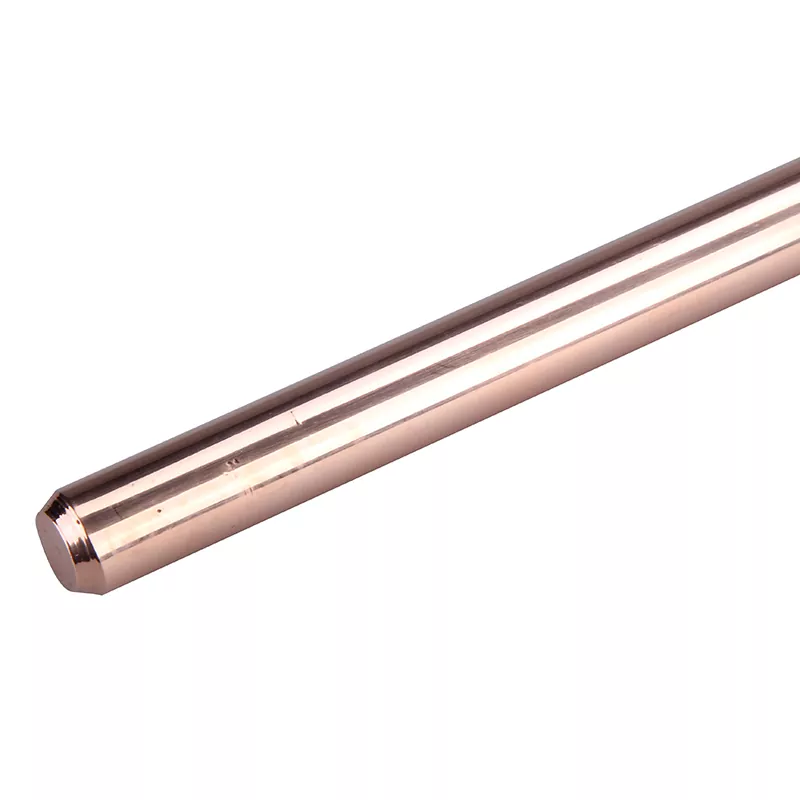


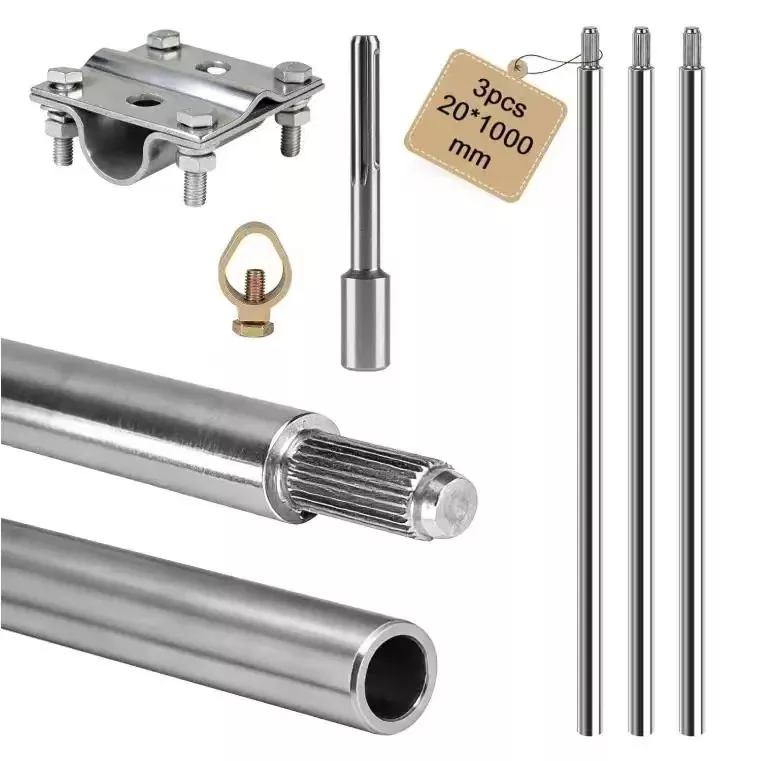
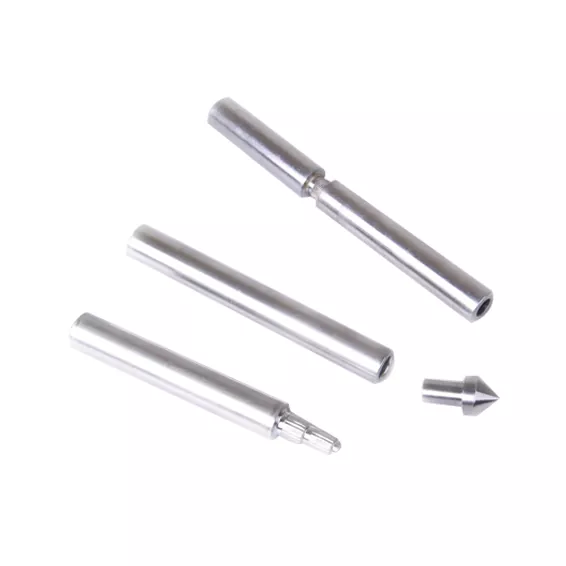
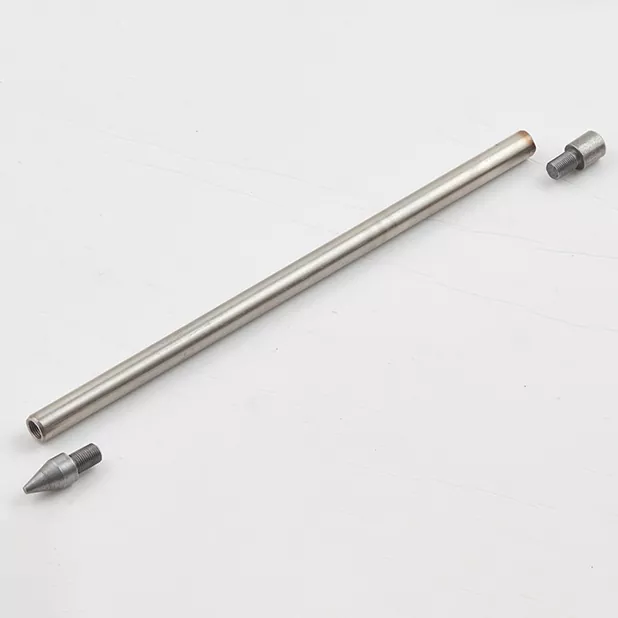
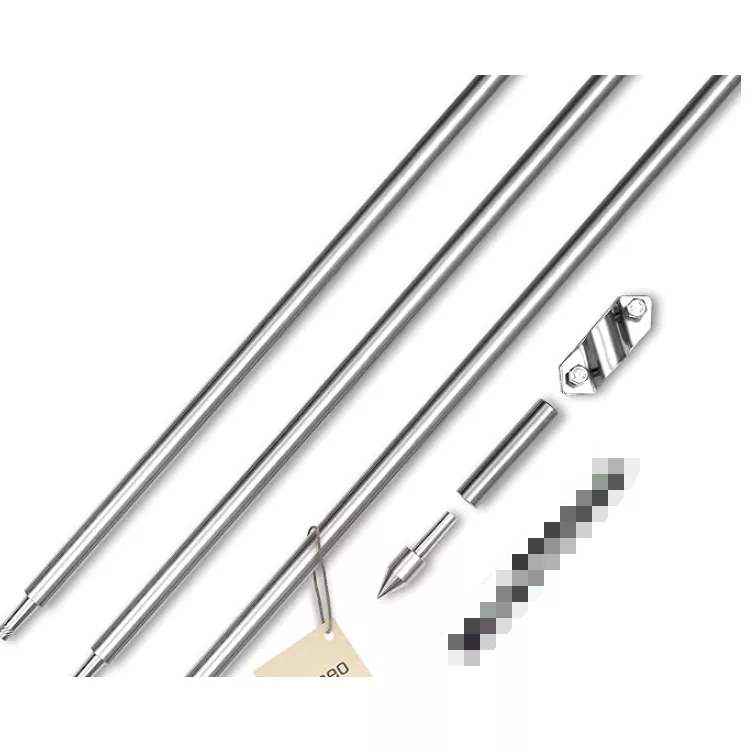
Non Magnetic Stainless Steel Ground Rod
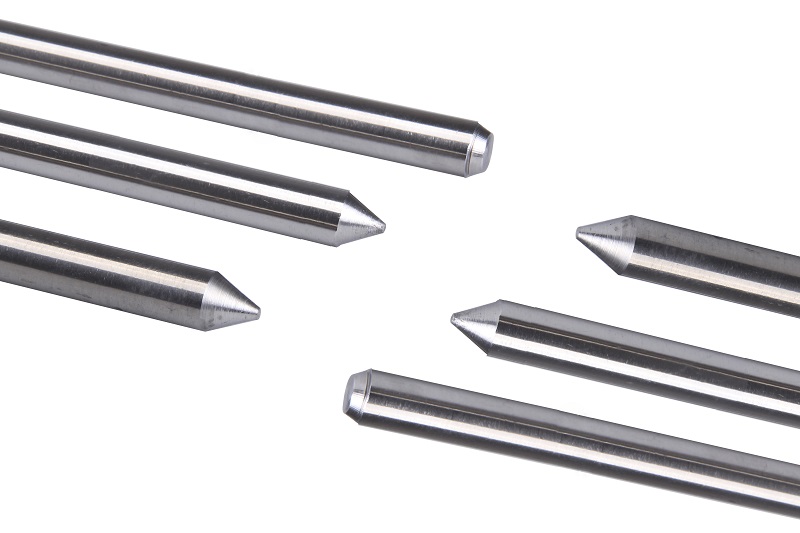
Saint Ni Lightning Protection Non Magnetic Stainless Steel Ground Rod is specially developed for grounding systems where electromagnetic stability is critical. Unlike conventional grounding electrodes that mainly focus on conductivity and corrosion resistance, this product places greater emphasis on magnetic performance and electromagnetic compatibility.
Manufactured from selected 201/304/316L stainless steel through controlled solution heat treatment, demagnetization, and precision CNC machining, the product maintains stable non-magnetic characteristics throughout production and service. Non Magnetic Stainless Steel Ground Rod is designed to minimize residual magnetism and electromagnetic disturbance around sensitive equipment.
With a combination of low magnetic permeability, corrosion resistance, and mechanical strength, Saint Ni Lightning Protection provides a specialized grounding solution for MRI facilities, precision laboratories, semiconductor plants, marine observation platforms, communication facilities, and electrical installations where electromagnetic interference must be controlled.
Key Advantages
1. Stable Non-Magnetic Performance for Sensitive Equipment
The internal material structure is controlled through professional solution treatment and demagnetization processes to minimize residual magnetism. Even after machining, installation impact, and long-term underground service, the grounding electrode maintains stable magnetic characteristics.
This helps reduce the risk of magnetic field distortion and eddy current effects around sensitive equipment, making it suitable for medical imaging systems, scientific instruments, precision sensors, and other applications where grounding materials must have controlled magnetic properties.
2. Designed for Electromagnetic Compatibility
The main value of this product is not simply corrosion resistance, but its ability to support grounding systems where electromagnetic compatibility is important. By minimizing unwanted magnetic effects around the grounding point, it helps maintain a more stable operating environment for precision equipment.
It is particularly suitable for MRI rooms, research laboratories, semiconductor production areas, radar systems, communication facilities, and high-voltage monitoring equipment.
3. Long-Term Material Stability
The stainless steel surface naturally forms a chromium-nickel passivation film that provides protection against oxidation and underground corrosion. Unlike coated grounding materials, there is no separate zinc or copper coating that can peel or crack during long-term service.
304 is suitable for relatively moderate environments, while 316L is recommended for marine, coastal, and chemical applications where chloride and corrosive media are more severe.
4. High Mechanical Strength for Reliable Installation
The stainless steel substrate provides high tensile and compressive strength, allowing the grounding electrode to withstand demanding installation conditions. It is resistant to deformation during hammer driving and drilling operations in hard soil or gravel.
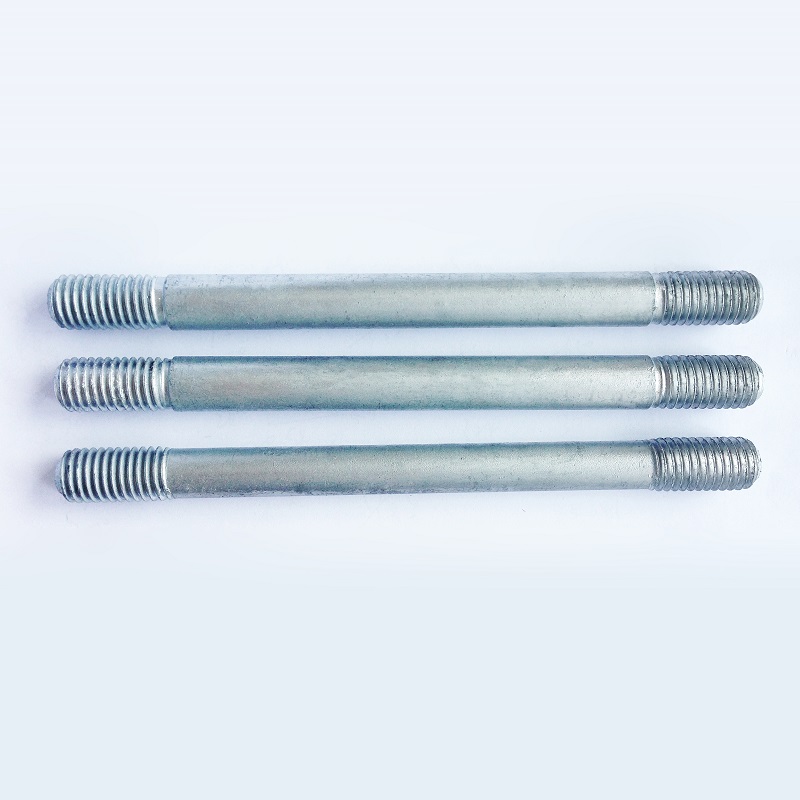
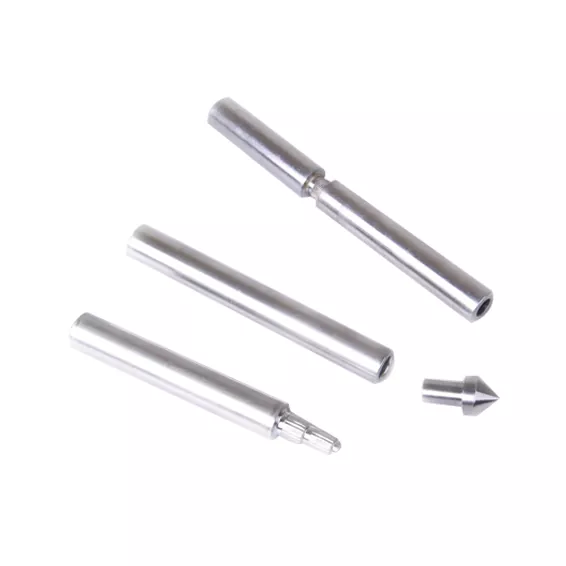
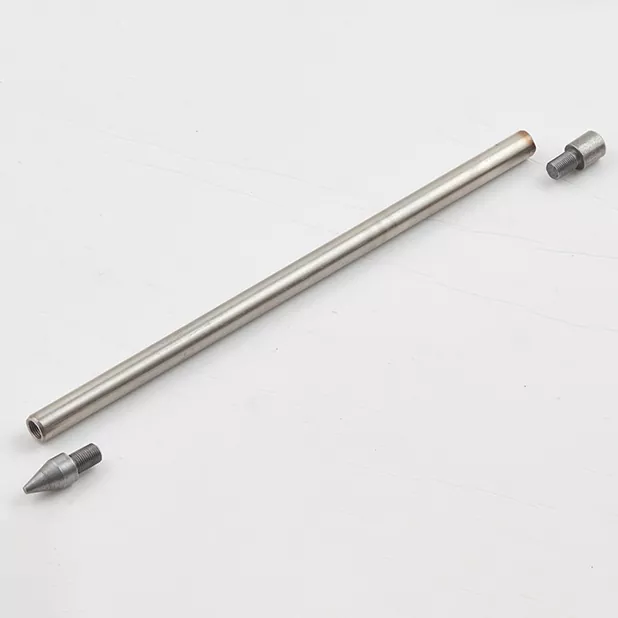
For projects requiring different installation depths, Saint Ni Lightning Protection can provide smooth or threaded configurations according to the grounding design.
Magnetic Performance Verification
For projects involving sensitive electromagnetic equipment, grounding material selection should not be based only on conductivity and corrosion resistance. Saint Ni Lightning Protection controls magnetic performance throughout material selection and manufacturing.
The stainless steel composition and ferrite content are controlled during raw material selection, followed by solution heat treatment to reduce magnetism generated during processing. Magnetic performance is also considered after CNC machining and thread processing to help maintain stable non-magnetic characteristics in the finished product.
For projects with strict technical requirements, Saint Ni Lightning Protection can provide relevant material and testing documentation to support engineering verification and quality acceptance. This is especially valuable for MRI facilities, research laboratories, marine sensing platforms, and precision measurement applications.
How to Select the Right Grade for Your Project
Different environments require different stainless steel grades. Saint Ni Lightning Protection provides 201, 304, and 316L options according to the project's electromagnetic and environmental requirements.
For general applications with moderate corrosion exposure, 201 or 304 can provide a practical balance between performance and procurement cost. For coastal facilities, marine platforms, chemical plants, and chloride-rich environments, 316L is recommended for its stronger corrosion resistance.
For projects involving MRI equipment, precision sensors, scientific instruments, or other magnetic-sensitive devices, buyers should provide the required magnetic permeability, grounding resistance target, installation environment, dimensions, and applicable standards before ordering. Saint Ni Lightning Protection can recommend the appropriate grade and configuration according to the actual project conditions.
Application Areas
Medical Imaging and Precision Research
Used in MRI rooms, CT equipment areas, scientific laboratories, precision measurement facilities, and research platforms where magnetic interference may affect equipment performance.
Semiconductor and Electronic Manufacturing
Suitable for semiconductor factories, electronic production facilities, precision equipment rooms, and automated manufacturing environments requiring stable grounding with controlled magnetic characteristics.
Marine Observation and Communication
Applied to ocean observation platforms, coastal monitoring systems, radar facilities, communication stations, and other installations where sensitive detection equipment operates in challenging electromagnetic environments.
Power and Transportation Infrastructure
Used in subway substations, high-voltage converter stations, electrical monitoring systems, and other infrastructure requiring reliable grounding and electromagnetic compatibility.
Real-life Case Studies
Project Name
Marine Observation and Research Platform off the Norwegian North Sea Coast
Project Background
The Marine Observation and Research Platform off the Norwegian North Sea Coast operates in an environment exposed to high concentrations of sea salt fog throughout the year. The station is equipped with precision ocean magnetic field sensors and underwater signal acquisition equipment.
Because these instruments are highly sensitive to electromagnetic disturbance, the grounding system was required to maintain low residual magnetism and avoid eddy current interference according to IEC and Norwegian maritime requirements.
The local general contractor selected solution-annealed non-magnetic 316L stainless steel grounding rods. Smooth models were used in shallow tidal areas, while threaded models were used in deeper rocky layers. The designed service life exceeded 30 years, with the overall grounding resistance maintained at ≤4Ω.
Project Solution
The project adopted Φ16mm Non Magnetic Stainless Steel Ground Rods according to different geological conditions. Smooth rods were installed in shallow tidal areas, while threaded rods with non-magnetic connectors were used in deep rocky strata.
Bentonite resistance-reducing material was placed around the grounding electrodes to improve grounding performance and provide additional protection in the coastal soil environment.
All flat bars, grounding clamps, and connection components used the same non-magnetic stainless steel material to maintain consistent magnetic characteristics throughout the grounding system and reduce the risk of magnetic imbalance or galvanic corrosion.
The offshore observation cabin was assembled without open flames. Grounding resistance was tested quarterly using the four-pole method, while residual magnetism and corrosion-related test records were maintained for project documentation.
Application Results
The project successfully applied a solution-annealed and demagnetized stainless steel grounding system to address magnetic interference affecting precision marine sensing equipment.
After completion, the station's grounding resistance remained stable at 2.4–3.5Ω. After three years of operation, segmented excavation inspections showed no residual magnetism or extensive salt-fog corrosion on the grounding electrodes. Problems related to magnetic distortion of detection data were eliminated.
Compared with a pure copper solution, the project reduced main material costs by 43%. The complete magnetic permeability and corrosion resistance documentation successfully passed acceptance requirements from the Norwegian Maritime Authority and IEC, establishing the project as a representative non-magnetic grounding application for precision coastal observation platforms in Northern Europe.
FAQ
Q1: What is the main difference between this product and a standard stainless steel grounding rod?
The key difference is magnetic performance. Standard stainless steel grounding rods mainly focus on conductivity, mechanical strength, and corrosion resistance, while this product is specifically processed and controlled for applications where residual magnetism and electromagnetic interference must be minimized.
Q2: Can the magnetic performance change after machining or installation?
Saint Ni Lightning Protection uses controlled material selection and solution treatment to minimize magnetism caused by manufacturing processes. Magnetic performance is also considered during CNC machining and thread processing to maintain stable characteristics in the finished product.
Q3: Which grade should I choose?
304 is generally suitable for moderate environments, while 316L is recommended for coastal, marine, chemical, and chloride-rich environments. The final selection should also consider the project's magnetic requirements, soil conditions, grounding resistance target, and applicable standards.
Q4: Where is this product commonly used?
Typical applications include MRI rooms, precision laboratories, semiconductor facilities, marine research platforms, communication stations, subway substations, radar facilities, and other projects where electromagnetic interference needs to be controlled.
Q5: What is the expected service life?
The service life depends on soil chemistry, moisture, installation conditions, and selected stainless steel grade. Under suitable conditions, stainless steel grounding systems can provide decades of underground service with relatively low maintenance requirements.
Saint Ni Lightning Protection Manufacturing & Quality Assurance
Saint Ni Lightning Protection specializes in the research, development, and manufacturing of lightning protection and grounding system materials. The company provides grounding products for industrial, medical, energy, transportation, marine, and infrastructure projects.
Saint Ni Lightning Protection operates under GB/T19001-2016 / ISO9001:2015 Quality Management System Certification and GB/T24001-2016 / ISO14001:2015 Environmental Management System Certification, with production and inspection procedures covering material selection, machining, dimensional accuracy, mechanical properties, and product quality.
Standard specifications can be supplied from regular inventory, while special dimensions, magnetic requirements, and dedicated grounding components can be customized according to project specifications. This enables Saint Ni Lightning Protection to provide stable product supply and technical support for international engineering projects.
Send Inquiry
Contact Info
-
Address
Woxi Avenue, Chengtan Street, Xinchang County, Shaoxing City, Zhejiang Province, China
-
Tel
-
Email
Get a Tailored Quote for Your Lightning Protection Project
Whether you need standard grounding rods, custom-engineered materials, or a complete system solution for a large-scale infrastructure project, Saint Ni is here to help. As a direct manufacturer with our own factory in China, we provide competitive pricing, fast response, and expert technical support.
Complete the form below and our engineering team will respond within 24 hours with a customized recommendation — including product specifications, certifications, and shipping options tailored to your region.


News Recommendations