

Pure Copper Lightning Rod Three Prong Type
Saint Ni Lightning Protection Pure Copper Lightning Rod Three Prong Type is designed for large-span buildings, storage tank areas, coastal facilities, historic buildings, and photovoltaic projects requiring reliable direct lightning protection. Made from high-purity copper with an integrated forged structure, it features three evenly distributed prongs for broader lightning interception coverage, with an effective interception radius of up to 3.2 m at a 3 m installation height under specified conditions.
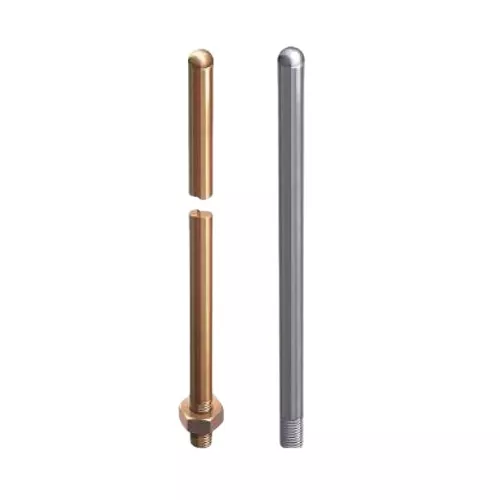
Saint Ni Lightning Protection Pure Copper Lightning Rod Three Prong Type is designed for direct lightning protection of large industrial buildings, storage tank areas, coastal facilities, historic buildings, and photovoltaic sites. It is manufactured from high-purity copper through integrated forging, combining high electrical conductivity, corrosion resistance, and mechanical stability. Standard lengths range from 0.6 m to 3 m, with rod diameters of 12–20 mm. Natural polished copper and antique patina finishes are available for different architectural requirements.
Protection Structure
Three-Prong Design
The three evenly distributed prongs provide multiple lightning interception points and help expand the protected area when correctly positioned within a complete lightning protection system. Under the specified design conditions, a 3 m installation height can provide an effective interception radius of up to 3.2 m. The actual protection range must be calculated according to building height, geometry, protection class, and applicable standards.
Conductive Path
The solid copper body provides a low-resistance path for lightning current when connected with properly selected copper down conductors and grounding components. The matching copper base and terminal help reduce contact resistance caused by unsuitable dissimilar-metal connections.


Material and Parameters
Copper Construction
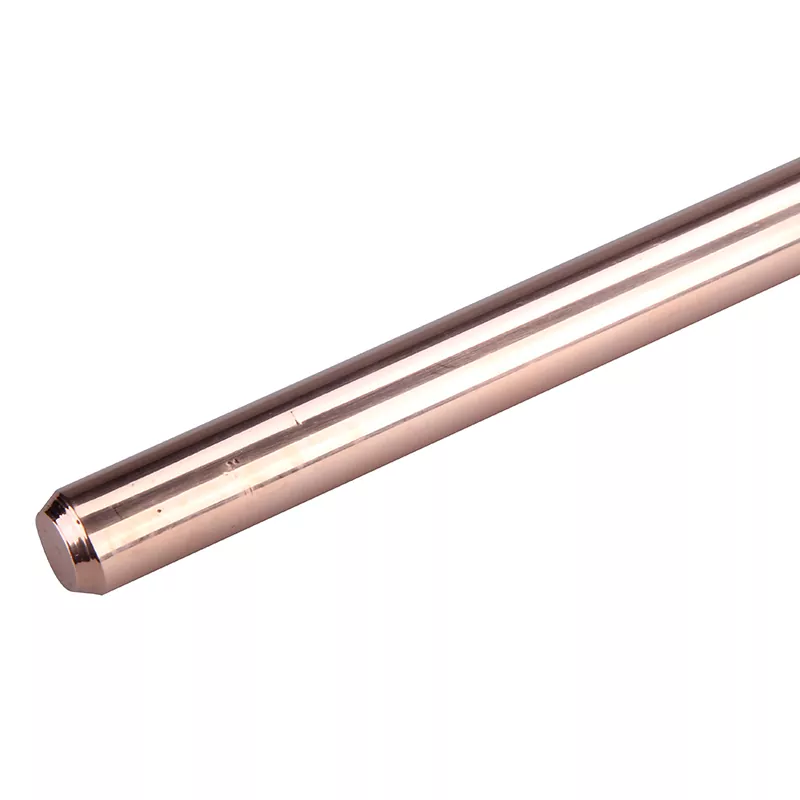
High-purity copper is used as the main material. Integrated forging produces a solid structure with good mechanical strength, while copper naturally develops a protective surface layer during outdoor exposure. This makes the product suitable for humid, coastal, and industrial environments when correctly installed and maintained.
Main Specifications
|
Parameter |
Specification |
|
Material |
High-purity copper |
|
Structure |
Three-prong |
|
Length |
0.6–3 m |
|
Rod Diameter |
12–20 mm |
|
Wind Resistance |
≥52 m/s |
|
Surface |
Polished / Antique Patina |
|
Base |
Copper |
|
Terminal |
Copper |
Typical Applications
Chemical and Storage Areas
The Pure Copper Lightning Rod Three Prong Type can be incorporated into lightning protection systems for oil storage tanks, chemical plants, gas facilities, and other industrial areas where corrosion resistance and reliable current conduction are required.
Historic Buildings
The antique copper finish allows the air terminal to better match traditional architectural styles. Mechanical fixing can also be used where the project requires reduced hot work and limited impact on the original roof structure.
Coastal Facilities
Ports, offshore structures, and coastal buildings are exposed to salt spray and high humidity. Copper provides good conductivity and corrosion resistance for long-term outdoor lightning protection applications, subject to proper system design and inspection.
Project Case
Coastal Chemical Park
A fine chemical industrial park in the Yangtze River Delta required lightning protection for dozens of storage tanks exposed to salt, acid and alkaline mists, mechanical vibration, and strong coastal winds. The project required corrosion-resistant copper air terminals and prohibited hot work throughout installation.
The project installed more than 320 units of Pure Copper Lightning Rod Three Prong Type, using 1.5 m rods at tank high points. Copper down conductors, bronze connectors, anti-corrosion conductive paste, and a copper-clad steel grounding network were used as part of the complete system.
According to the project data, the three-prong arrangement reduced the number of installation points by approximately 45% compared with the original single-rod design. After four years of operation, inspections reported no visible corrosion, structural deformation, or oxidation-related heating at the main connection points. The reported long-term replacement cost was reduced by 62% compared with the previous galvanized single-rod solution.
Installation and Inspection
Mounting
The terminal should be installed on a structurally suitable base and positioned according to the calculated protection zone. For rooftop projects, the fixing method should consider roof structure, wind load, terminal height, and local lightning protection requirements.
System Inspection
The air terminal should be inspected together with the down conductor and grounding system. Connection tightness, corrosion, mechanical deformation, and grounding resistance should be checked periodically, especially in coastal areas and facilities subject to vibration.
Product Testing
Electrical Conductivity Test
Each batch is checked for electrical conductivity to verify that the copper material provides a suitable low-resistance path for lightning current. The test focuses on material consistency and electrical continuity between the rod body and connection components.
Mechanical Strength Test
The rod body and three-prong structure are inspected for structural integrity and deformation resistance. Wind-resistance performance is evaluated according to the specified product and installation requirements, with a rated wind resistance of ≥52 m/s.
Corrosion Resistance Test
Surface-treated samples can undergo salt spray and corrosion-resistance testing to evaluate their performance under humid, coastal, and industrial atmospheric conditions. The test results can be provided for project evaluation when available.
Dimensional Inspection
Key dimensions, including rod length, diameter, prong configuration, base connection, and mounting interfaces, are checked against approved drawings or specifications to ensure installation compatibility and batch-to-batch consistency.
Inspection Documents
Saint Ni Lightning Protection can provide available factory inspection records and third-party testing documents for qualified products. For large projects, additional conductivity, salt spray, and mechanical testing can be discussed according to the buyer's technical requirements.
Certifications
Saint Ni Lightning Protection operates under GB/T19001-2016 / ISO9001:2015 quality management system certification and GB/T24001-2016 / ISO14001:2015 environmental management system certification. Product samples and available third-party testing documents can be provided for project evaluation.
FAQ
Q1: What protection radius can it provide?
A 3 m installation height can provide an effective interception radius of up to 3.2 m under the specified design conditions. The final protection zone must be determined according to the building and applicable lightning protection design requirements.
Q2: Is it suitable for coastal areas?
Yes. High-purity copper provides good electrical conductivity and corrosion resistance and can be used in coastal environments with appropriate surface treatment, connections, and regular inspection.
Q3: What sizes are available?
Standard lengths are 0.6–3 m, with rod diameters of 12–20 mm. Other dimensions can be discussed for project requirements.
Q4: What wind speed can it withstand?
The supplied specification indicates a wind resistance of ≥52 m/s. Final suitability depends on installation height, base structure, local wind-load requirements, and fixing method.
Q5: Can it be used on historic buildings?
Yes. The antique patina finish can better match historic architecture, while mechanical fixing can reduce the need for hot work where required by the project.
Supply Support
Saint Ni Lightning Protection has more than ten years of experience in lightning protection and grounding materials. We provide standard sizes, samples, technical documentation, and project-based customization for industrial, coastal, photovoltaic, historic building, and storage tank applications.
For the Pure Copper Lightning Rod Three Prong Type, buyers can request product specifications, samples, testing documents, and technical support based on project requirements.
Hot Tags: Pure Copper Lightning Rod Three Prong Type Manufacturer, Three Prong Lightning Rod Supplier, Copper Lightning Rod Wholesale
Send Inquiry
Contact Info
-
Address
Woxi Avenue, Chengtan Street, Xinchang County, Shaoxing City, Zhejiang Province, China
-
Tel
-
E-mail
Get a Tailored Quote for Your Lightning Protection Project
Whether you need standard grounding rods, custom-engineered materials, or a complete system solution for a large-scale infrastructure project, Saint Ni is here to help. As a direct manufacturer with our own factory in China, we provide competitive pricing, fast response, and expert technical support.
Complete the form below and our engineering team will respond within 24 hours with a customized recommendation — including product specifications, certifications, and shipping options tailored to your region.