

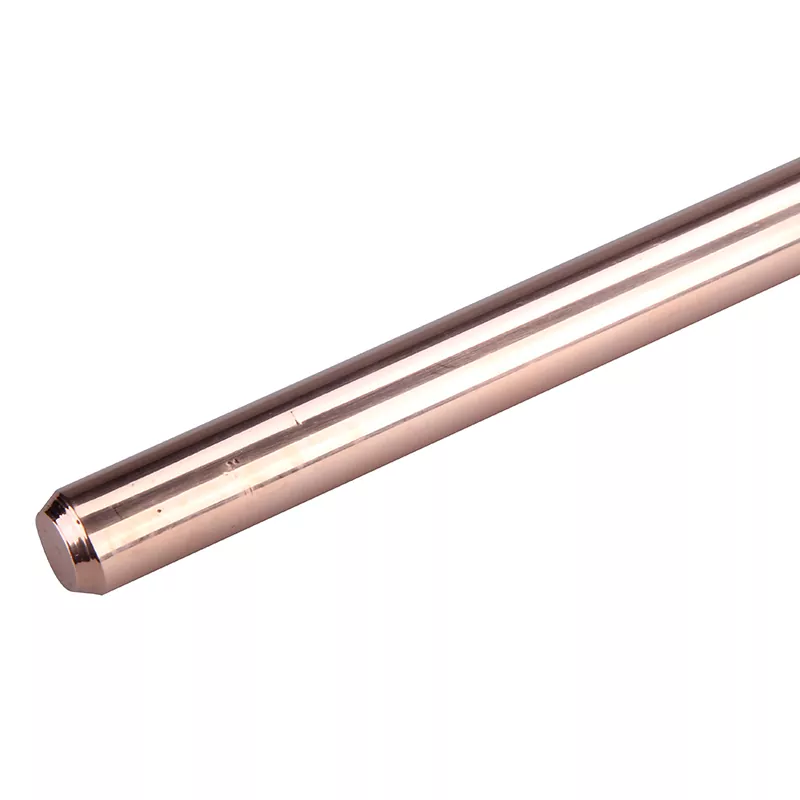


Graphene Grounding Wire for Lightning Protection
Saint Ni Lightning Protection’s Graphene Grounding Wire for Lightning Protection is a non-metallic grounding conductor developed for lightning protection systems in power, renewable energy, telecommunications, chemical, and construction projects. Its carbon-based conductive structure provides a lightweight alternative to conventional metal grounding conductors, especially where corrosion, difficult access, or limited excavation makes traditional grounding installation challenging. It is designed for use with vertical grounding electrodes, grounding modules, and mechanical connection systems.
Saint Ni Lightning Protection develops this material for projects requiring a combination of electrical conductivity, corrosion resistance, flexibility, and simplified installation. The conductive graphene structure forms a continuous current-dissipation path for lightning and fault currents, while the non-metallic composition avoids the galvanic corrosion associated with dissimilar metal grounding components.
Compared with conventional steel-based grounding materials, the product is significantly lighter and easier to transport. Graphene Grounding Wire for Lightning Protection can be supplied in coils and installed along irregular routes without heavy lifting equipment. The flexible structure can follow mountain slopes, rocky surfaces, wetlands, narrow trenches, and curved foundations, making it suitable for grounding projects where conventional rigid conductors are difficult to install.
Conductive Performance
The conductive carbon structure provides a continuous path for lightning current and power-frequency fault current. Under suitable soil conditions and when combined with an appropriate vertical grounding electrode, the complete grounding system can achieve a resistance of ≤0.5 Ω according to the project design and testing conditions. Its electrical performance is intended to remain stable under seasonal changes in soil moisture.
Non-Metallic Corrosion Protection
The material does not rely on a steel core or an external metallic coating. Its dense graphene-based structure acts as a physical barrier against moisture, salts, weak acids, and alkaline substances in the surrounding soil. This makes it particularly suitable for chemical sites, saline-alkali areas, wetlands, and other locations where conventional metallic grounding conductors may require frequent corrosion inspection.
Flexible Installation
The Graphene Grounding Wire for Lightning Protection can be continuously laid along the designed grounding route and shaped to follow uneven terrain. Its low weight reduces manual handling requirements, while mechanical clamps eliminate the need for exothermic welding in the standard installation method. For restricted sites such as mountain communication towers or ecological protection areas, the installation method can significantly reduce excavation, transportation, and vegetation disturbance.


Applications
Renewable Energy
The material can be used for lightning protection and grounding systems at photovoltaic plants, energy storage facilities, and onshore wind farms, particularly in mountainous, rocky, or high-resistivity areas where transportation and excavation are difficult.
Power and Telecommunications
It is suitable for 10 kV/35 kV distribution rooms, small substations, transmission towers, 5G base stations, microwave relay stations, and other facilities requiring lightning-current dissipation and equipment grounding.
Industrial and Construction Projects
The product can also be applied to chemical parks, storage tanks, factories, high-rise buildings, airports, scenic areas, and other projects requiring long-term grounding performance in corrosive or environmentally sensitive locations.
FAQ
Can it be used in areas with frequent lightning?
Yes. The conductive structure is designed to provide a continuous path for lightning-current dissipation. The complete grounding system should be designed according to the local lightning protection requirements, soil conditions, and electrode configuration.
Does it require welding during installation?
The standard installation method uses dedicated mechanical clamps, so exothermic welding is not required for the main connections. This can simplify installation where hot-work operations are restricted.
Is it suitable for mountainous sites?
Yes. Its lightweight and flexible structure allows it to follow slopes, rock surfaces, narrow trenches, and irregular terrain without requiring extensive excavation.
Does the wire need to be pulled tightly?
No. Excessive tension should be avoided during installation. A suitable amount of slack should be reserved to accommodate soil settlement, thermal movement, or ground deformation.
Can it be used together with grounding electrodes?
Yes. It can be connected with compatible vertical grounding electrodes and grounding modules through dedicated mechanical connection components to form a complete grounding system.
Real Project Case
10 kV Switchgear Room in an Inland Saline-Alkali Chemical Industrial Park
The project was located in an inland chemical industrial park where the soil contained high levels of salt and corrosive substances. The original copper-clad steel grounding system developed copper-layer delamination and severe steel-core corrosion after five years, causing grounding resistance to exceed the required value and contributing to lightning-related equipment failures. Because continuous production made large-scale excavation difficult, the new system needed a long service life and stable grounding performance with minimal maintenance.
Project Solution
Saint Ni Lightning Protection installed a ring-shaped horizontal grounding grid using Graphene Grounding Wire for Lightning Protection, combined with matching graphene grounding modules. Long coils were laid continuously to reduce connection points, while dedicated graphite crimp clamps were used for mechanical connections. Conductive anti-corrosion compound was applied at the connection areas, and the non-metallic grounding structure eliminated galvanic corrosion between different metals.
Application Results
After completion, the station's grounding resistance remained between 2.5 Ω and 3.5 Ω. During seven years of operation, annual resistance tests showed no significant increase, and no corrosion or open-circuit failures were reported. The switchgear room also experienced no further lightning-related equipment damage. Compared with the previous metallic grounding solution, the project reduced comprehensive maintenance costs by approximately 65%.
Installation
The grounding route is prepared according to the project design, with excavation kept to the minimum required depth. The conductor is laid continuously along the trench and naturally shaped around curves and obstacles. Mechanical clamps are used at connection points, while approved resistance-reducing materials can be applied where required by the grounding design. After backfilling, the complete grounding system should be tested using an appropriate grounding-resistance measurement method.
Project Support and Customization
Saint Ni Lightning Protection provides project-oriented grounding solutions rather than supplying only individual conductors. Based on soil conditions, grounding resistance requirements, installation environment, and project scale, the product can be customized in terms of dimensions, coil length, connection method, and compatible grounding electrodes. Technical documents and product test reports can also be provided for project evaluation, tender submission, and site acceptance.
Quality and Environmental Management
Saint Ni Lightning Protection maintains standardized production and inspection procedures covering raw materials, forming, electrical performance, mechanical properties, and finished-product consistency. The company operates under a GB/T19001-2016 / ISO9001:2015 Quality Management System and a GB/T24001-2016 / ISO14001:2015 Environmental Management System. With stable production capacity and flexible scheduling, Saint Ni Lightning Protection supports both small-batch sample orders and large-scale grounding projects for photovoltaic, wind power, telecommunications, power, chemical, and infrastructure applications.
Hot Tags: Graphene Grounding Wire for Lightning Protection Supplier, Lightning Protection Grounding Wire Manufacturer
Send Inquiry
Contact Info
-
Address
Woxi Avenue, Chengtan Street, Xinchang County, Shaoxing City, Zhejiang Province, China
-
Tel
-
E-mail
Get a Tailored Quote for Your Lightning Protection Project
Whether you need standard grounding rods, custom-engineered materials, or a complete system solution for a large-scale infrastructure project, Saint Ni is here to help. As a direct manufacturer with our own factory in China, we provide competitive pricing, fast response, and expert technical support.
Complete the form below and our engineering team will respond within 24 hours with a customized recommendation — including product specifications, certifications, and shipping options tailored to your region.


