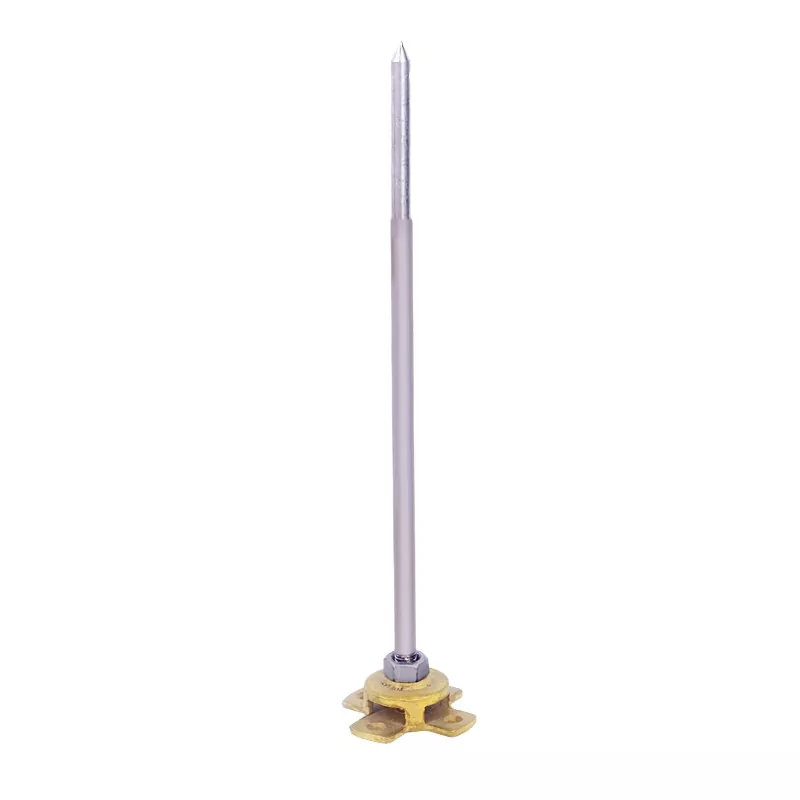


Aluminum Lightning Rod Three Prong Type
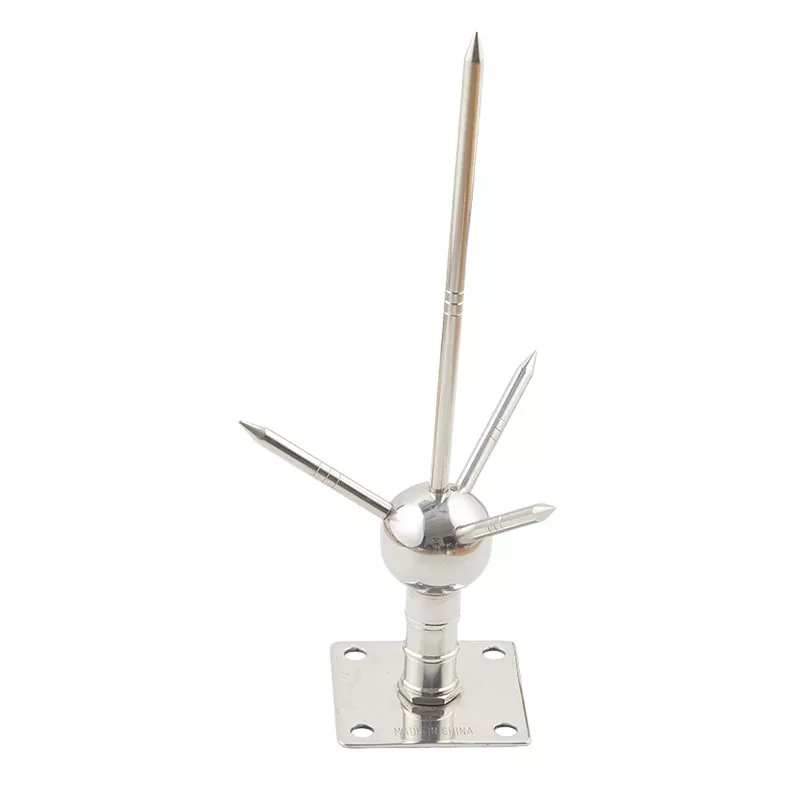
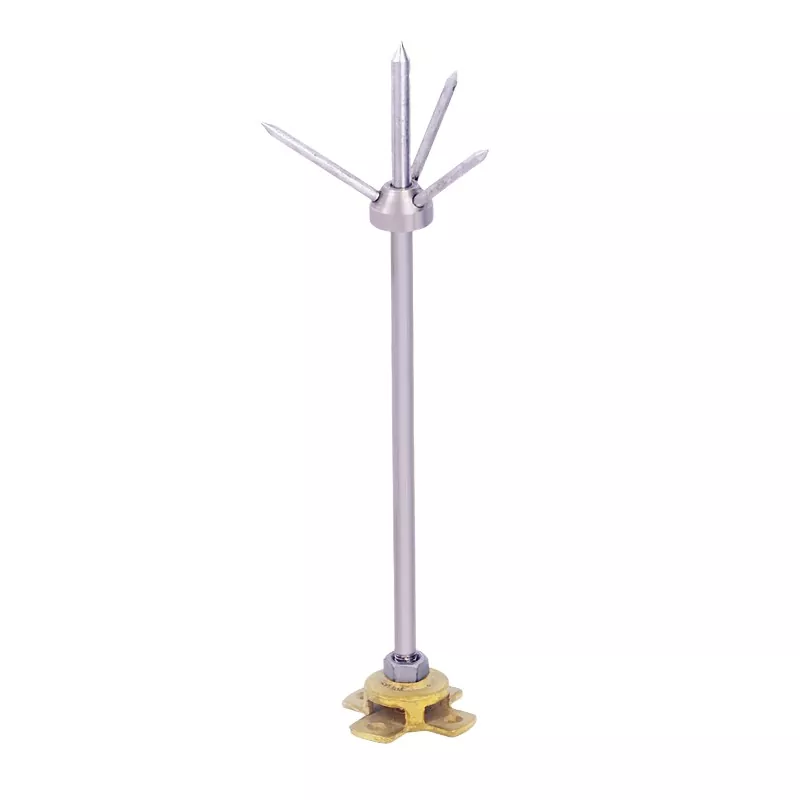
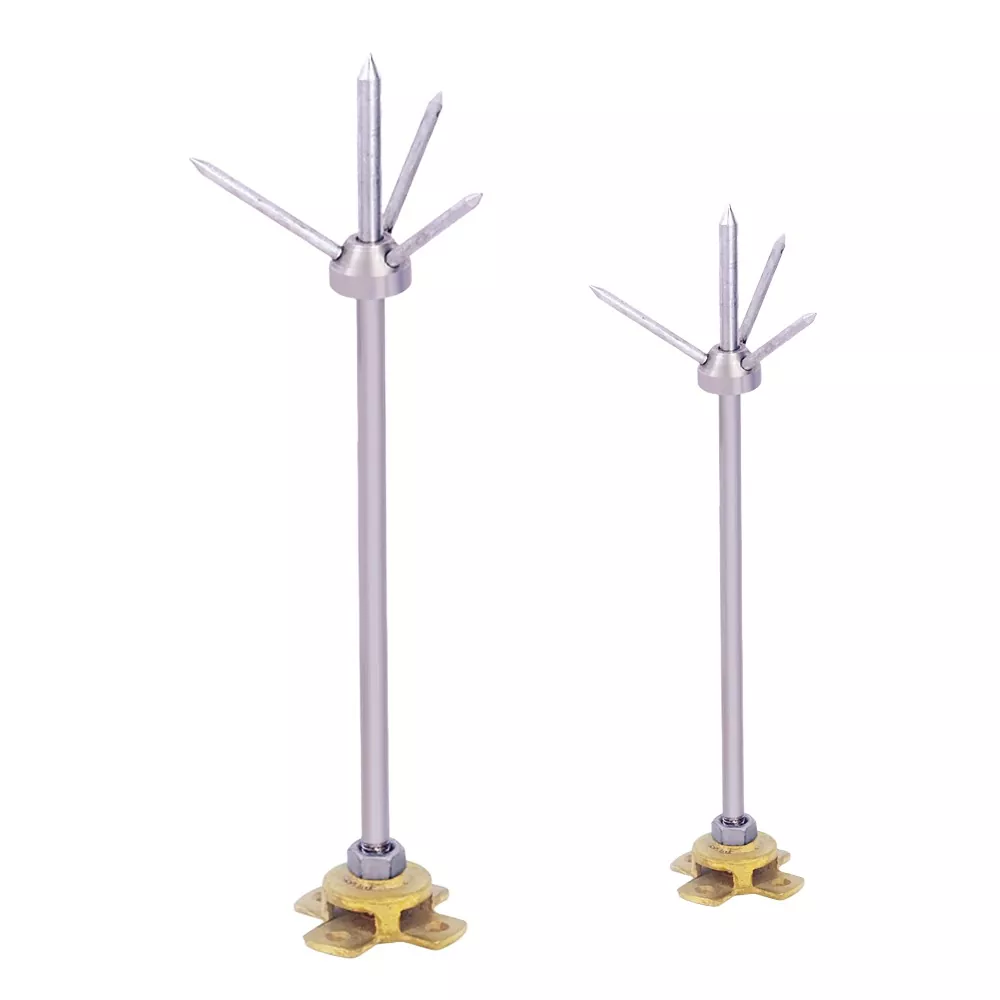
Designed for large-area, lightweight lightning protection projects, the Aluminum Lightning Rod Three Prong Type from Saint Ni Lightning Protection uses a solid aluminum alloy body and 120° three-pronged structure to provide multi-directional lightning interception with lower installation weight and material cost. With ≥45 m/s wind resistance, oxidation-resistant surface, and bolt-mounted installation, it is suitable for distributed PV arrays, rural buildings, temporary construction sites, and simple inland industrial structures.
For large rooftop areas, distributed PV arrays, temporary construction camps, and simple steel buildings, lightning protection often needs to balance coverage, installation workload, and material cost. The Aluminum Lightning Rod Three Prong Type uses a solid aluminum alloy body with a 120° three-pronged structure to provide multi-directional lightning interception while keeping the overall weight low.
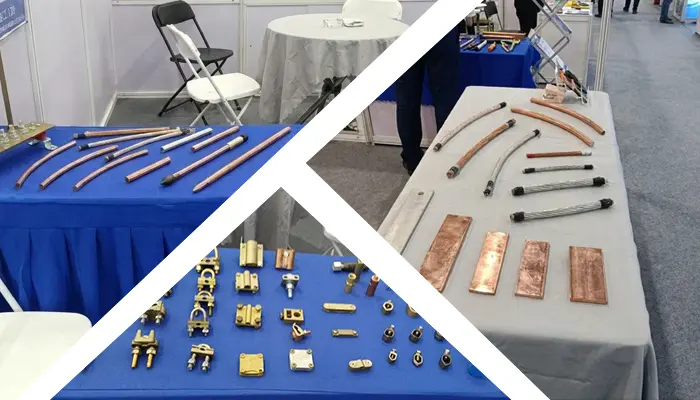
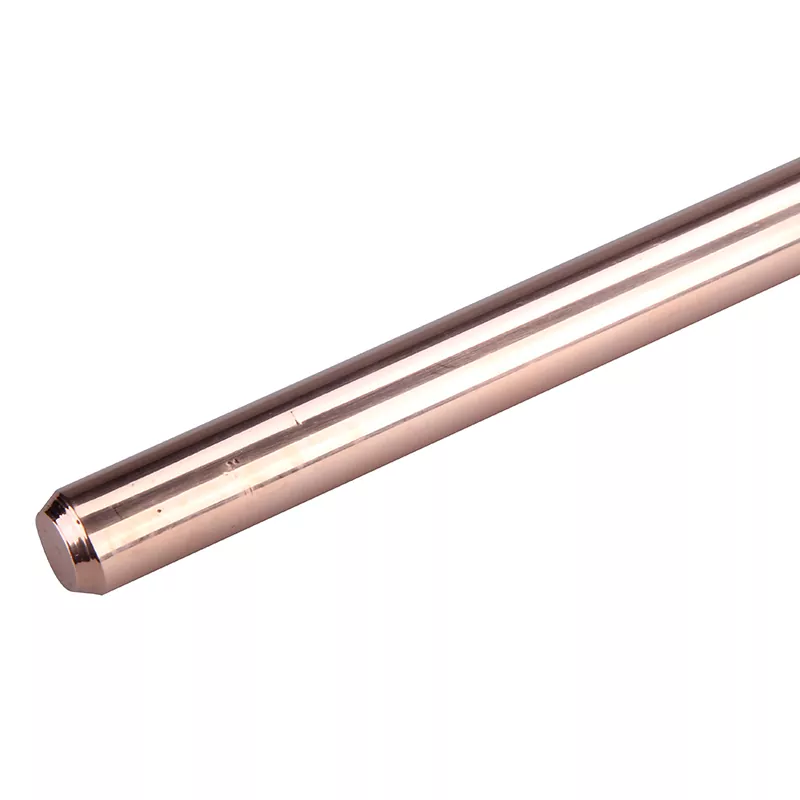
Manufactured by Saint Ni Lightning Protection, the product is designed for dry inland and lightweight outdoor applications. Its integrated structure is easy to transport and bolt into position, while the aluminum surface naturally forms an oxide layer for basic atmospheric corrosion resistance. Aluminum down conductors, grounding clamps, bentonite resistance-reducing agents, and grounding electrodes can be supplied to form a complete lightweight grounding system.
Product Specifications
|
Item |
Specification |
|
Product Type |
Three-Pronged Lightning Rod |
|
Material |
Solid Aluminum Alloy |
|
Structure |
120° Three-Pronged Design |
|
Manufacturing |
One-Piece Forging / Machining |
|
Wind Resistance |
≥45 m/s |
|
Typical Height |
1.2 m |
|
Surface |
Oxidation-Resistant Aluminum Surface |
|
Installation |
Bolted Connection |
|
Connection |
Aluminum Terminal / Isolation Washer |
|
Application |
Residential, PV, Temporary and Light Industrial Projects |
Specifications such as height, rod diameter, base dimensions, and connection configuration can be customized according to project requirements.
Product Features
Lightweight Construction
The solid aluminum alloy body reduces handling weight during rooftop and mountainous construction. It is suitable for projects where materials must be transported manually or installed at elevated locations.
Multi-Directional Protection
The 120° three-pronged structure provides multiple lightning interception points and helps reduce protection gaps around roof corners, PV arrays, and irregular structures. At the same installation height, the design can reduce the number of required installation points for suitable project layouts.
Wind Resistance
The integrated triangular base provides structural stability, while the reinforced aluminum body supports wind resistance of ≥45 m/s. Proper anchoring and structural assessment are required for high-wind and typhoon-prone locations.
Corrosion Considerations
Aluminum naturally develops a protective oxide layer. The product is particularly suitable for dry inland environments. For coastal, industrial, or highly corrosive locations, the project environment and material compatibility should be evaluated before selection.
Material Compatibility
When aluminum is connected with copper or steel components, direct dissimilar-metal contact can cause galvanic corrosion under suitable environmental conditions. Saint Ni Lightning Protection recommends using isolation washers and appropriate conductive anti-corrosion compounds at transition points.
This approach helps maintain the electrical connection while reducing long-term corrosion risks. Aluminum down conductors and aluminum grounding clamps can also be used where the project design permits.
Product Testing
Before shipment, Saint Ni Lightning Protection can arrange inspection and testing according to project requirements. Typical evaluation items include material verification, dimensional inspection, electrical conductivity, mechanical performance, surface condition, and corrosion-related testing.
For engineering projects, customers can request relevant inspection records or third-party testing documents. Sample testing is also available for projects that require pre-installation verification.
Installation Process
Roof Positioning
Install the lightning rod at suitable high points such as roof ridges, PV equipment areas, temporary buildings, or other locations determined by the lightning protection design.
Base Fixing
Secure the aluminum base using suitable expansion bolts or structural fasteners. The fixing method should match the roof or supporting structure and the expected wind load.
Electrical Connection
Connect the aluminum down conductor to the matching terminal and tighten the connection using the specified torque. Where aluminum is connected to copper or steel, use an isolation washer and suitable anti-corrosion conductive compound.
Down Conductor Routing
Route the down conductor vertically toward the grounding system and secure it at appropriate intervals. Avoid sharp bends, unnecessary loops, and locations subject to mechanical damage.
Grounding Connection
Connect the down conductor to the underground grounding grid. Bentonite or other approved resistance-reducing materials may be used according to the grounding design and local requirements.
Project Case
120 MW PV Project
Project: Northern Yunnan Mountainous Region 120 MW Distributed Solar PV Project
The project was located in steep mountainous terrain where materials had to be transported manually. The area was dry with little rainfall and had no significant seawater or chemical corrosion exposure. Temporary buildings and PV substations required lightning protection, while the project had strict budget and construction-time requirements.
The project used 1.2 m Aluminum Lightning Rod Three Prong Type products at the high points of PV arrays and substations. Aluminum down conductors and aluminum grounding clamps were used, with isolation washers installed at aluminum-to-copper transition points. The grounding grid consisted of 70 mm copper-clad steel stranded wire and Φ16 hot-dip galvanized grounding rods, with bentonite resistance-reducing material around the grounding electrodes.
More than 460 units were installed. Compared with the previous single-rod layout, the three-pronged arrangement reduced installation points by 43%. Third-party testing recorded site grounding resistance of 2.9–3.8 Ω, and the project passed the lightning protection acceptance inspection. After two years of operation, inspections found no bending, extensive oxidation, or overheating at the connections. The project also allowed most units to be dismantled and reused after completion, while main material costs were 42% lower than the brass three-pronged solution.
Application Areas
Distributed PV
Suitable for residential PV arrays, temporary PV facilities, and small distributed solar projects where lightweight installation and controlled material costs are important.
Rural Buildings
Applicable to single-story rural buildings, simple rooftops, and clustered residential structures, particularly in dry inland regions.
Temporary Construction
The low weight and bolt-mounted structure make it suitable for temporary camps, site offices, temporary power rooms, and other structures requiring removable lightning protection.
Light Industrial Buildings
Can be used for simple color-steel workshops, small warehouses, and other lightweight industrial structures after confirming the lightning protection design and supporting structure.
Inland Storage Areas
Suitable for selected small and medium-sized storage facilities in dry inland environments where material compatibility and grounding requirements have been properly evaluated.
Maintenance
Regular inspection should focus on the rod body, base bolts, terminals, down conductor connections, and grounding system. Check for deformation, surface damage, loose fasteners, corrosion at dissimilar-metal connections, and changes in grounding resistance.
For outdoor storage, keep products dry and covered. Avoid prolonged exposure to standing water, strong acids, or strong alkaline cleaning agents.
Quality & Supply
Saint Ni Lightning Protection manufactures aluminum lightning protection components under GB/T19001-2016 / ISO9001:2015 quality management and GB/T24001-2016 / ISO14001:2015 environmental management systems.
Standard specifications are available for regular orders, while customized heights, dimensions, and connection configurations can be supplied for engineering projects. Saint Ni Lightning Protection supports sample orders, batch procurement, product testing documents, and long-term project supply.
FAQ
Can the height be customized?
Yes. Saint Ni Lightning Protection can customize the height, diameter, base dimensions, and connection configuration according to project requirements.
Is it suitable for coastal areas?
Aluminum Lightning Rod Three Prong Type can be used only after evaluating the local corrosion conditions and material compatibility. Coastal salt spray environments require additional corrosion and connection protection considerations.
Can it be connected directly to copper conductors?
Aluminum-to-copper connections should not simply be joined without protection. Isolation washers and suitable conductive anti-corrosion compounds should be used to reduce galvanic corrosion.
Can it be installed without welding?
Yes. The standard installation uses mechanical fastening and does not require open-flame welding, provided that the supporting structure and fixing method meet the project requirements.
How should it be maintained?
Inspect the base, fasteners, terminals, rod body, and down conductor periodically. Grounding resistance should also be tested according to the maintenance schedule specified for the lightning protection system.
Returns & Exchanges
Products should be inspected for specification, quantity, appearance, and transportation damage upon receipt. Shipping damage, incorrect shipment, or missing items should be reported with photographic evidence within 24 hours.
Returns caused by customer selection errors or engineering changes are accepted only for unused and intact products, subject to applicable logistics and packaging costs. Products that have been cut, drilled, installed, damaged by improper handling, or altered during construction are generally not eligible for return or exchange.
Returned products should retain their original packaging, accessories, and conformity documents. Damage caused by improper installation, unauthorized modification, or unsuitable environmental conditions is outside the standard return policy.
Hot Tags: Aluminum Lightning Rod Three Prong Type, Three Prong Aluminum Lightning Rod, Aluminum Lightning Rod Manufacturer
Send Inquiry
Contact Info
-
Address
Woxi Avenue, Chengtan Street, Xinchang County, Shaoxing City, Zhejiang Province, China
-
Tel
-
E-mail
Get a Tailored Quote for Your Lightning Protection Project
Whether you need standard grounding rods, custom-engineered materials, or a complete system solution for a large-scale infrastructure project, Saint Ni is here to help. As a direct manufacturer with our own factory in China, we provide competitive pricing, fast response, and expert technical support.
Complete the form below and our engineering team will respond within 24 hours with a customized recommendation — including product specifications, certifications, and shipping options tailored to your region.