



Lightning Peak Shaving Air Terminal
The Lightning Peak Shaving Air Terminal is designed to reduce the peak value and steepness of lightning current before it causes excessive stress to electrical equipment. Developed by Saint Ni Lightning Protection, it uses a ring-shaped multi-electrode structure to respond to changes in the surrounding electric field and provide a controlled discharge path for lightning energy.
Unlike conventional lightning rods that mainly focus on intercepting and conducting high-current lightning, this Lightning Peak Shaving Air Terminal emphasizes gradual discharge and peak suppression. When direct lightning cannot be avoided, the device helps reduce lightning current amplitude and limit the rate of current rise, lowering the risk of insulation flashover, induced overvoltage, and surge damage.
The unit features a passive metal structure without electronic components, making it suitable for high-voltage transmission towers, substations, communication towers, high-rise buildings, and other outdoor installations where long-term reliability and low maintenance are required.
Operating Principle
Controlled Current Discharge
The ring-shaped electrode structure responds to the strong electric field generated by thunderclouds. It promotes a gradual upward discharge process rather than relying solely on a sudden high-current interception. This helps reduce the intensity of the lightning current entering the protected system and suppresses associated transient overvoltage.
For projects where lightning protection is closely related to grid reliability, the Lightning Peak Shaving Air Terminal can work together with down conductors and a properly designed grounding system to provide a coordinated path for residual lightning energy.
Key Features
Peak Current Reduction
The device is designed to limit lightning current peaks to approximately 7 kA under the specified operating conditions, reducing the thermal and electromagnetic stress imposed on transmission and electrical equipment.
Passive Construction
The product uses a mechanical metal structure without electronic triggering or other vulnerable electronic components. This design reduces dependence on electronic control systems and is suitable for remote towers and outdoor installations with limited maintenance access.
High-Resistance Grounding Compatibility
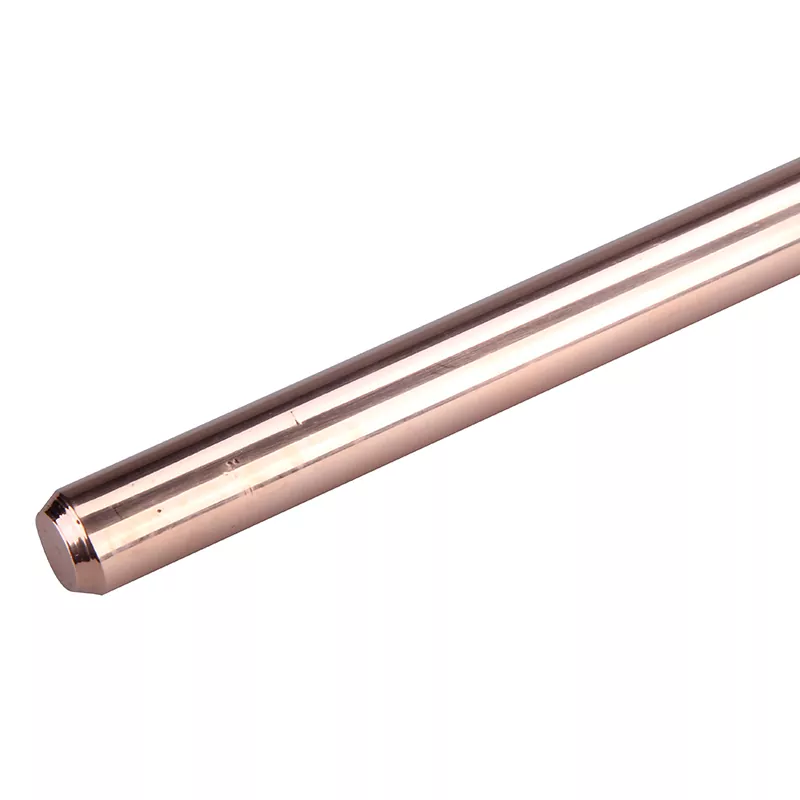
The system can be combined with nano-carbon grounding strips, round conductors, and vertical grounding rods to form a corrosion-resistant grounding network. This makes it suitable for mountainous and remote areas where soil resistivity is high and conventional grounding construction is difficult.
Outdoor Structural Stability
The stainless-steel structure is designed for demanding outdoor conditions and can be used in open-field towers and coastal areas subject to strong winds. The specified wind-resistance requirement can reach 50 m/s when the corresponding installation configuration is applied.


Engineering Applications
The Lightning Peak Shaving Air Terminal is intended for large outdoor structures where lightning current and induced overvoltage can affect electrical equipment. Typical applications include 110 kV–500 kV transmission lines, substations, radio and television towers, microwave communication towers, high-rise buildings, open-pit mining facilities, and other high-lightning-risk infrastructure.
For each project, the installation height, protection area, tower geometry, grounding resistance, soil resistivity, and local lightning conditions should be evaluated before determining the quantity and configuration.
Project Case
500 kV Transmission Line in Angola
The project covered the Luanda–Benguela 500 kV transmission line in western Angola. The region experiences frequent thunderstorms, while the transmission corridor crosses granite mountains, red-soil desert, and coastal salt-flat areas. High soil resistivity and severe salt-mist corrosion created additional challenges for conventional grounding systems.
Installation Solution
A total of 216 high-risk transmission towers were equipped with peak-shaving terminals in 9 m and 12 m configurations. The protection geometry was calculated according to the rolling sphere method, while nano-carbon flat grounding strips and vertical grounding rods were used to establish radial grounding networks. The stainless-steel structure was selected to withstand local gust conditions of up to 50 m/s.
The Lightning Peak Shaving Air Terminal was integrated with the tower grounding system to reduce lightning current peaks and suppress the steepness of transient currents. Its passive construction also allowed local electrical crews to complete installation after basic technical training.
Application Results
After three consecutive thunderstorm seasons, the project reported that lightning-related flashover and trip events along the 500 kV line decreased from an annual average of 22 events to zero. No further surge-related failures were reported for the substation relay protection and communication equipment during the recorded period.
The project was subsequently used as a reference for lightning protection upgrades on additional 220 kV transmission lines in Benguela and Huí provinces, demonstrating the suitability of the solution for high-lightning, high-corrosion, and high-soil-resistivity environments.
Installation Requirements
Mounting and Connection
The terminal should be installed at a suitable high point according to the project protection calculation. The mounting structure must provide sufficient mechanical strength, while the down conductor should be connected securely to the grounding network. All connection points should maintain reliable electrical continuity and be protected against environmental corrosion.
Grounding System
The grounding system should be designed according to the site's soil resistivity and lightning protection requirements. Nano-carbon grounding strips, round conductors, and vertical grounding rods can be combined where conventional grounding electrodes have difficulty maintaining long-term performance in high-resistance or corrosive soil.
Testing & Technical Support
Saint Ni Lightning Protection provides product inspection documents, technical specifications, and project support for the Lightning Peak Shaving Air Terminal. Technical assistance is available for product selection, installation, grounding-system matching, and project-specific configurations. Standard models are available, with customized sizes and configurations supported for transmission towers, substations, communication towers, and other applications.
Saint Ni Lightning Protection operates under GB/T19001-2016 / ISO9001:2015 and GB/T24001-2016 / ISO14001:2015 management systems.
Return & Exchange Policy
Please check the product specifications, quantity, and condition upon delivery. Shipping damage, incorrect shipments, or missing items should be reported with photos within 24 hours for replacement or exchange.
Returns caused by incorrect selection or project changes are accepted only for unused and complete products. Installed, modified, damaged, or improperly stored products are not eligible for return or exchange. Returned products should include the original packaging, accessories, and certificates.
FAQ
Can it be used on high-resistivity mountainous sites?
Yes. The device can be integrated with a suitable grounding system for mountainous areas with high soil resistivity. The final grounding configuration should be determined according to the site's measured soil conditions and project requirements.
Can several units be installed in one area?
Yes. Multiple units can be arranged according to the calculated protection area and required spacing. Their grounding systems should be properly interconnected to maintain an equipotential grounding network.
Does the grounding resistance change after lightning?
Under normal operating conditions, the grounding resistance should remain relatively stable. Regular inspection is still recommended for high-voltage transmission and other critical infrastructure, particularly after severe lightning events or major environmental changes.
Is maintenance required after installation?
The passive structure does not rely on electronic control components, reducing routine maintenance requirements. However, periodic inspection of the terminal, mounting hardware, electrical connections, down conductors, and grounding system is recommended for critical projects.
Can the product be customized?
Yes. Saint Ni Lightning Protection can provide different configurations according to tower height, installation conditions, protection requirements, wind conditions, and grounding-system design. Project drawings and technical parameters can be reviewed before production.
Hot Tags: Lightning Peak Shaving Air Terminal Manufacturer, Lightning Air Terminal Supplier, Air Terminal Wholesale
Send Inquiry
Contact Info
-
Address
Woxi Avenue, Chengtan Street, Xinchang County, Shaoxing City, Zhejiang Province, China
-
Tel
-
E-mail
Get a Tailored Quote for Your Lightning Protection Project
Whether you need standard grounding rods, custom-engineered materials, or a complete system solution for a large-scale infrastructure project, Saint Ni is here to help. As a direct manufacturer with our own factory in China, we provide competitive pricing, fast response, and expert technical support.
Complete the form below and our engineering team will respond within 24 hours with a customized recommendation — including product specifications, certifications, and shipping options tailored to your region.


