What Makes a Copper Bonded Grounding Rod Reliable for Long-Term Earthing?
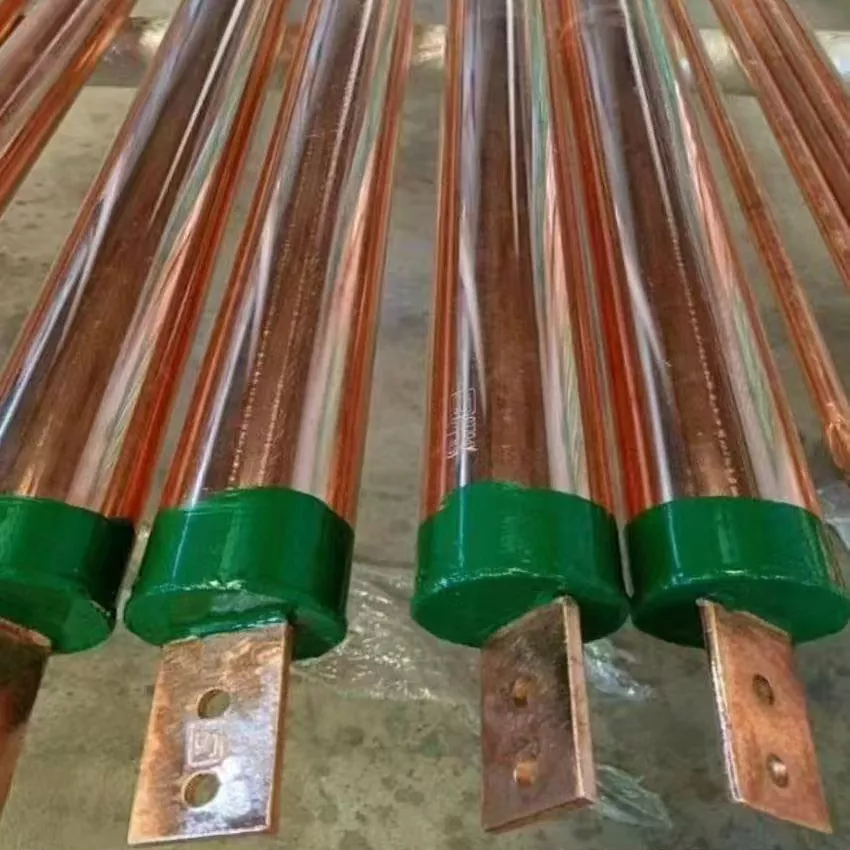
A dependable grounding system is not simply about putting a metal rod into the soil. The electrode must withstand installation forces, maintain electrical continuity, resist corrosion, and remain mechanically stable over years of exposure to moisture, salts, chemicals, temperature changes, and soil movement. A Copper Bonded Grounding Rod combines a strong steel core with a copper outer layer to address these practical requirements in one grounding component.
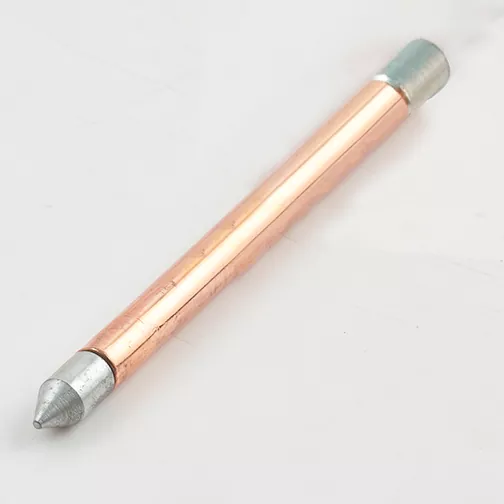
Copper bonded grounding rods are widely used in electrical earthing and lightning protection because they combine the mechanical strength of steel with the conductivity and corrosion resistance of copper. The copper layer protects the steel core from direct contact with the surrounding soil while providing a conductive surface for current dissipation. Proper selection should consider soil resistivity, rod diameter, rod length, copper coating thickness, connection method, installation depth, mechanical strength, and applicable project standards. For commercial, industrial, telecom, renewable-energy, and lightning-protection installations, choosing a properly manufactured rod can help improve grounding stability and reduce long-term maintenance concerns.
Table of Contents
- 1. Understanding the Copper Bonded Grounding Rod
- 2. How Its Construction Supports Grounding Performance
- 3. Key Benefits for Electrical and Lightning Protection Systems
- 4. Copper Bonded vs. Other Grounding Rod Materials
- 5. Common Applications and Project Environments
- 6. Important Factors When Specifying a Grounding Rod
- 7. Installation Practices That Affect Performance
- 8. Quality Checks Buyers Should Consider
- 9. Common Purchasing and Installation Mistakes
- 10. Frequently Asked Questions
- 11. Building a More Reliable Grounding System
1. Understanding the Copper Bonded Grounding Rod
A grounding electrode provides a controlled path for electrical current to enter the earth. During normal operation, it can help establish the reference potential of an electrical system. During a fault, surge, or lightning event, the grounding network becomes particularly important because unwanted electrical energy needs a dependable path away from sensitive equipment and people.
A Copper Bonded Grounding Rod normally consists of a steel core surrounded by a bonded copper layer. The steel provides mechanical strength, while the copper surface contributes electrical conductivity and corrosion resistance. This combination makes the rod suitable for direct burial or driven-earthing applications where both electrical and mechanical performance matter.
Unlike a simple steel rod, the copper surface helps isolate the structural steel core from direct exposure to soil. Unlike a solid copper rod, the steel core provides additional strength during driving and handling. This balance is one reason copper bonded construction is widely used in grounding and lightning-protection systems.
Practical point: A grounding rod is only one part of an earthing system. Overall performance also depends on soil resistivity, electrode depth, conductor size, connection quality, electrode spacing, and the design of the complete grounding network.
2. How Its Construction Supports Grounding Performance
The performance of a grounding rod starts with the relationship between its core and outer conductive layer. A well-manufactured rod needs a consistent bond so that the copper remains securely attached during transportation, driving, connection, and long-term soil exposure.
For many commonly specified copper bonded rods, the copper coating is measured in micrometres. Project requirements may specify minimum coating thicknesses, and different standards or certification programs can have their own requirements. For example, UL 467 applications commonly reference a minimum copper layer of 10 mil, equivalent to approximately 254 micrometres, while IEC 62561-2 requirements should be checked according to the applicable edition and product classification.
The quality of the bond is just as important as the nominal thickness. A thick layer that cracks, separates, or becomes damaged during installation can compromise the protective function of the electrode. This is why professional buyers should evaluate both material specifications and manufacturing quality rather than judging a grounding rod only by its appearance.
Steel Core Provides mechanical strength and helps the rod resist deformation during installation.
Copper Surface Provides a conductive exterior and improved resistance to many soil-corrosion conditions.
Bonded Interface Helps maintain electrical and mechanical continuity between the steel core and copper layer.
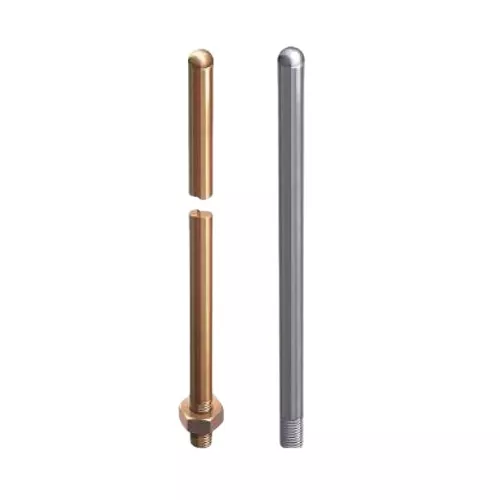
Threaded Connection Allows compatible couplers and grounding accessories to extend rod depth where required.
3. Key Benefits for Electrical and Lightning Protection Systems
Choosing a grounding electrode is ultimately about dependable performance over the expected service period. Copper bonded construction offers several practical advantages for contractors, engineers, distributors, and facility owners.
- Good corrosion resistance: The copper exterior can provide better resistance to many soil environments than unprotected steel.
- High mechanical strength: The steel core helps the rod withstand installation forces, particularly when deeper driving is required.
- Stable electrical path: A continuous conductive surface supports reliable current dissipation into the surrounding soil.
- Long-term value: A durable electrode can reduce the frequency of replacement and remedial grounding work.
- Flexible installation: Different lengths and diameters can be selected according to soil conditions and project requirements.
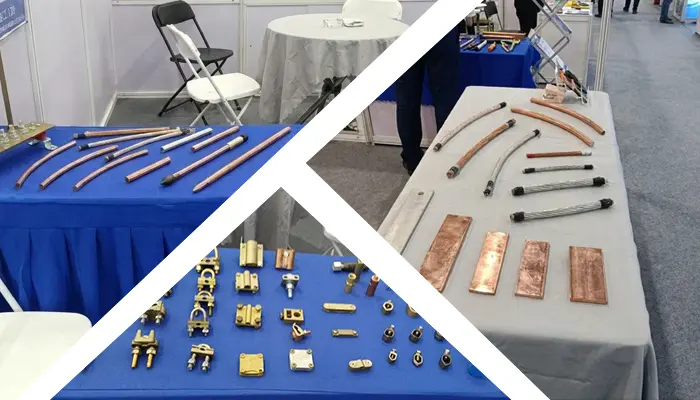
- Broad application range: Copper bonded rods can be integrated into grounding systems for buildings, substations, telecom infrastructure, renewable-energy installations, and lightning protection.
The real advantage is not simply the use of copper. It is the combination of electrical performance, mechanical strength, corrosion resistance, and practical installation characteristics within one electrode.
4. Copper Bonded vs. Other Grounding Rod Materials
Grounding electrodes are available in several material configurations. The appropriate solution depends on the environment, required service life, mechanical conditions, budget, and project specification.
| Grounding Rod Type | Main Strength | Potential Limitation | Typical Consideration |
|---|---|---|---|
| Copper Bonded Steel | Combines steel strength with a copper conductive surface | Quality depends on coating and bonding process | General-purpose grounding and lightning protection |
| Solid Copper | Excellent conductivity and corrosion resistance | Higher material cost and softer mechanical structure | Specialized or highly demanding installations |
| Galvanized Steel | Cost-effective and mechanically strong | Zinc coating can be affected by aggressive soil conditions | Projects where zinc-coated steel is specifically accepted |
| Stainless Steel | Strong corrosion resistance in selected environments | Higher material cost | Special corrosive or chemically challenging locations |
For many standard driven-earthing projects, copper bonded steel provides a practical middle ground. It can offer a combination of durability and installation strength without requiring the entire rod to be manufactured from copper.
5. Common Applications and Project Environments
The same grounding principle can be applied across many electrical infrastructure projects. However, the final electrode configuration should always be matched to the electrical design and soil conditions.
- Lightning protection: Provides an electrode connection for lightning protection networks.
- Commercial buildings: Supports grounding and bonding systems for offices, shopping facilities, hotels, and other structures.
- Industrial facilities: Used around factories, production lines, machinery, control systems, and electrical distribution equipment.
- Telecommunication towers: Helps establish a grounding path for towers, cabinets, antennas, and associated equipment.
- Solar installations: Can be incorporated into grounding networks for photovoltaic systems and related electrical equipment.
- Power infrastructure: Used as part of grounding arrangements for distribution equipment and substations.
- Data and communication facilities: Supports grounding systems where electrical stability and protection of sensitive equipment are important.
- Infrastructure projects: Can be integrated into grounding networks for transportation, utility, and public facilities.
In lightning protection projects, the grounding electrode should not be considered independently. Down conductors, bonding points, inspection facilities, earth conductors, electrode arrangements, and the surrounding soil all influence the final system performance.
6. Important Factors When Specifying a Grounding Rod
Selecting a grounding rod solely by diameter or price can create problems later. A more reliable procurement process begins with the project environment and electrical requirements.
| Selection Factor | Why It Matters | Questions to Consider |
|---|---|---|
| Soil Resistivity | Strongly influences grounding resistance | Has a soil-resistivity survey been completed? |
| Rod Length | Determines how deeply the electrode reaches into the soil | Is deeper soil more conductive than the surface layer? |
| Rod Diameter | Affects mechanical strength and material quantity | Will the rod encounter hard or rocky ground? |
| Copper Thickness | Influences corrosion protection and specification compliance | What minimum coating does the project require? |
| Bond Quality | Helps maintain long-term electrical and mechanical continuity | Is the copper securely bonded to the steel core? |
| Thread Design | Affects connection strength and installation quality | Are compatible couplers and accessories available? |
| Applicable Standard | Determines testing and acceptance requirements | Does the project specify UL, IEC, NEMA, BS, or another standard? |
Standard lengths are often available in configurations such as 1.2 m, 1.5 m, and 3 m, while coupled rods can be used where deeper penetration is required. The exact dimensions should be determined by the grounding design rather than automatically selecting the longest or thickest available rod.
7. Installation Practices That Affect Performance
Even a high-quality grounding rod can underperform if installation is poorly executed. The objective is to establish effective contact between the electrode and surrounding soil while protecting the rod and its connection points.
- Evaluate the soil first. Soil resistivity measurements provide useful information for determining electrode depth and overall grounding design.
- Prepare the installation location. Avoid unnecessary obstructions and confirm that underground utilities will not be damaged.
- Use appropriate driving equipment. The installation method should prevent excessive bending, mushrooming, or surface damage.
- Protect the connection point. The conductor-to-rod connection should be mechanically secure and electrically reliable.
- Use compatible accessories. Couplers, clamps, driving heads, and other components should be compatible with the rod dimensions and material.
- Test the completed system. Ground resistance or other appropriate commissioning measurements should be performed according to the project requirements.
Important: Do not assume that adding a longer rod automatically solves every high-resistance grounding problem. In some soil conditions, multiple electrodes, increased spacing, deeper electrodes, or a larger grounding network may be required.
8. Quality Checks Buyers Should Consider
For distributors and project procurement teams, the biggest risk is often not selecting the wrong general product category but receiving a product that does not consistently match the specified construction.
Before placing a large order, buyers can consider checking:
- Steel core material and mechanical properties.
- Copper purity and nominal coating thickness.
- Uniformity of the copper layer.
- Bonding or adhesion between copper and steel.
- Rod diameter and length tolerances.
- Rod straightness.
- Thread dimensions and thread condition.
- Packaging quality and protection during transportation.
- Batch traceability and inspection documentation.
- Applicable product certifications or laboratory test reports.
A useful procurement practice is to request documentation before mass production or shipment rather than waiting until the goods arrive. Depending on the project, buyers may request dimensional inspection records, copper coating measurements, mechanical test results, bonding tests, and relevant certification documentation.
9. Common Purchasing and Installation Mistakes
Grounding products are sometimes treated as simple commodity items. This approach can overlook factors that have a significant influence on long-term performance.
Buying Only on Price The lowest quotation may not provide the required coating thickness, bonding quality, documentation, or consistency.
Ignoring Soil Conditions A standard rod configuration may not achieve the desired grounding performance in high-resistivity soil.
Checking Coating but Not Bonding A nominal copper thickness does not by itself prove that the copper layer will remain securely attached.
Using Incompatible Accessories Poorly matched clamps or couplers can create weak electrical or mechanical connections.
Another common issue is specifying a product standard without confirming the exact requirements of the project. UL 467, IEC 62561-2, NEMA GR-1, BS 7430, IEEE guidance, and local electrical codes can serve different purposes. The applicable requirements should therefore be confirmed by the project engineer, authority, or responsible electrical professional.
10. Frequently Asked Questions
What is a Copper Bonded Grounding Rod?
It is a grounding electrode constructed with a steel core and a copper outer layer. The steel provides mechanical strength while the copper surface provides electrical conductivity and corrosion resistance.
Why is copper bonded steel widely used for grounding?
It offers a practical combination of mechanical strength, conductive performance, corrosion resistance, and installation durability. This makes it suitable for many grounding and lightning-protection applications.
What copper coating thickness should a grounding rod have?
The required thickness depends on the applicable product standard and project specification. Some commonly specified UL applications use a minimum copper layer of 10 mil, approximately 254 micrometres. Buyers should confirm the exact requirement for their market and certification.
Is a copper bonded rod better than a solid copper rod?
Neither is universally better. Copper bonded steel provides strong mechanical performance and good corrosion resistance, while solid copper may be preferred for specific applications where its material properties justify the additional cost. Project conditions should determine the choice.
Can copper bonded grounding rods be connected together?
Yes. Compatible couplers can be used to connect multiple sections where a deeper electrode is required. The coupler and threaded connection should be suitable for the rod specification and installation conditions.
Where are copper bonded grounding rods commonly used?
They are commonly used in lightning protection, building grounding, industrial facilities, telecommunications, solar installations, electrical distribution systems, and other infrastructure projects requiring reliable earthing.
Does a grounding rod alone determine the final grounding resistance?
No. Grounding resistance depends on factors such as soil resistivity, electrode dimensions, electrode depth, spacing, conductor configuration, and the overall grounding network.
What should buyers request from a grounding rod manufacturer?
Buyers should consider requesting technical specifications, material information, dimensional tolerances, copper coating measurements, mechanical and bonding test results, applicable certifications, inspection records, and batch traceability documentation.
11. Building a More Reliable Grounding System
A grounding system is a long-term safety and infrastructure investment. The performance of the system depends on much more than the visible part of an electrode. Material selection, copper coating quality, steel strength, bonding integrity, dimensions, installation conditions, connection methods, and soil characteristics all work together.
A Copper Bonded Grounding Rod provides a balanced solution by combining a mechanically strong steel core with a conductive copper exterior. When properly manufactured and correctly installed, it can support grounding and lightning-protection systems across commercial, industrial, telecommunications, renewable-energy, and infrastructure applications.
For project buyers, contractors, and distributors, the most effective approach is to define the actual environmental and electrical requirements before selecting a product. Instead of comparing quotations only by price, evaluate the construction, copper thickness, bonding quality, dimensions, testing, certification, documentation, and long-term suitability of the grounding rod.
Strengthen Your Grounding Project with a Professional Solution
Saint Ni Lightning Protection Technology (Shaoxing) Co., Ltd. focuses on lightning protection and grounding solutions designed for dependable electrical safety and infrastructure protection. For projects requiring copper bonded grounding rods, grounding components, or customized lightning protection solutions, professional technical support can help you match the product configuration with your installation environment and project requirements.
Whether you are an electrical contractor, engineering company, system integrator, distributor, or industrial project buyer, choosing the right grounding components at the specification stage can help reduce installation risks and improve long-term system reliability. Contact us to discuss your grounding project, product requirements, dimensions, standards, and customized solutions.
Related News
- How Is Pulsed Active Lightning Rod System Changing the Future of Lightning Protection?
- What are the methods for surface coating treatment of the grounding copper bars?
- Deeply engage in the field of lightning protection and grounding
- How Lightning Rods Work: From Lightning Attraction to Safe Grounding
- How should lightning protection and grounding materials be selected for projects in highly corrosive environments?
Leave me a message