

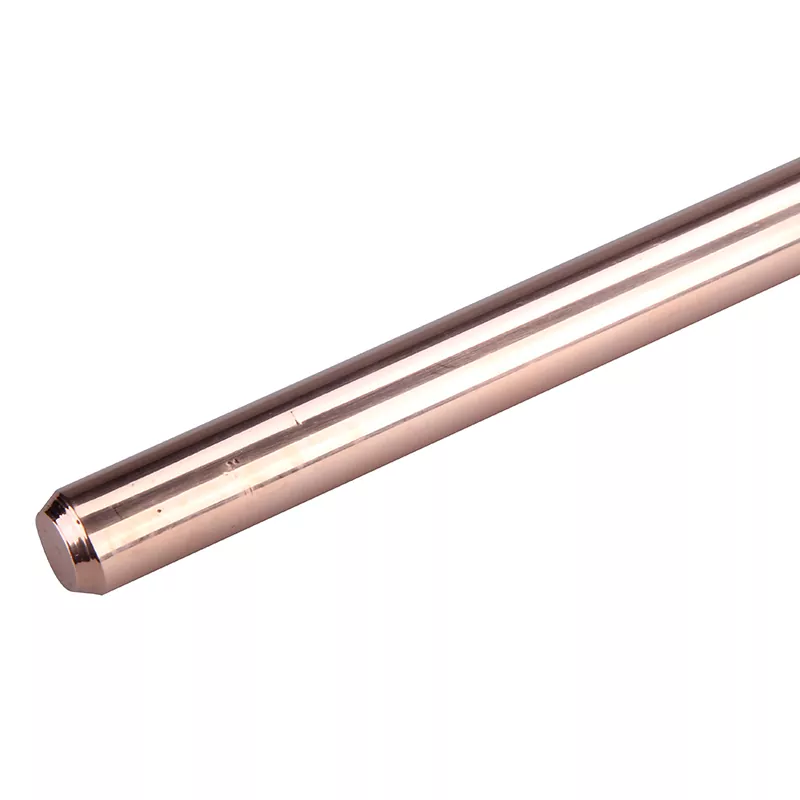


Exothermic Welding Mold for Grounding Cable Connection
Exothermic Welding Mold for Grounding Cable Connection are often determined by what happens at the joint rather than by the grounding conductor itself. In long-term grounding projects, a connection must maintain low electrical resistance while withstanding moisture, soil chemicals, salt fog, lightning current, and repeated thermal stress. Saint Ni Lightning Protection develops graphite tooling specifically for this critical connection stage, using precision-machined high-density graphite to support stable exothermic welding of different grounding conductors.
As a source manufacturer with an independent graphite machining workshop, Saint Ni Lightning Protection produces Exothermic Welding Mold for Grounding Cable Connections with precise cavities, controlled molten-metal flow paths, and stable reaction chambers. The product range covers straight-through, T-branch, cross-connection, stranded wire-to-grounding rod, stranded wire-to-copper busbar, and flat steel connection configurations. The factory operates under GB/T19001-2016 / ISO9001:2015 and GB/T24001-2016 / ISO14001:2015 management systems, supporting consistent manufacturing and environmentally responsible production.
How the Mold Supports a Reliable Grounding Connection
1. Precise Cavity Design for Stable Exothermic Welding
The internal cavity, reaction chamber, and metal flow channel are precisely machined to match the required conductor configuration. During an aluminothermic reaction, the graphite cavity helps guide molten metal around the conductor connection area and supports uniform joint formation.
Compared with mechanical connections that depend on physical contact pressure, a properly formed exothermic weld creates a continuous metallic connection. This reduces the possibility of loose contact, gaps, and connection degradation during long-term grounding system operation.
2. High-Density Graphite for Repeated Welding Operations
Saint Ni Lightning Protection uses high-density, high-purity graphite with a compact structure and low porosity. The material is designed to withstand the high temperatures generated during exothermic welding while resisting repeated thermal erosion.
With proper cleaning, drying, storage, and handling, the mold can be reused for multiple welding operations. This allows contractors to reduce consumable usage when completing large grounding networks with hundreds or thousands of connection points.
3. Stable Weld Formation for Low-Resistance Current Paths
The quality of a grounding joint directly influences how effectively fault current and lightning current can be discharged. When the mold is correctly selected and securely clamped, the molten metal can fully fill the connection cavity and form a dense weld without obvious air gaps or incomplete fusion.
This continuous metallic structure helps maintain a reliable conductive path between grounding conductors and reduces the risk of resistance increases caused by loose mechanical connections or long-term contact deterioration.


Connection Configurations and Grounding Conductors
Different grounding layouts require different mold cavity geometries. Saint Ni Lightning Protection provides standard configurations for common grounding construction requirements, including straight conductor connections, branch connections, crossing conductors, and grounding electrode connections.
The Exothermic Welding Mold for Grounding Cable Connection can be matched with commonly used grounding materials such as bare copper stranded wire, copper-clad steel, aluminum-clad steel, galvanized steel grounding conductors, copper busbars, flat steel, and grounding rods. Customers can select the appropriate mold according to conductor size, connection direction, and project design.
1. Straight-Through Connection
Designed for joining two conductors along the same axis, the straight-through configuration is commonly used in grounding grid extensions and continuous conductor runs.
2. T-Branch Connection
The T-type configuration is suitable for branch connections where a grounding conductor needs to connect to the main grounding path. It is commonly used in grid branch points and equipment grounding layouts.
3. Cross Connection
The cross configuration supports the connection of conductors crossing at approximately right angles. It is suitable for grounding grids where multiple conductor paths intersect.
4. Grounding Rod Connection
Specialized cavities are available for connecting stranded grounding conductors with vertical grounding rods, helping establish a continuous conductive path between the grounding grid and earth electrodes.
Where It Is Used in Grounding Projects
1. Substation Grounding Networks
Substations require reliable grounding paths for fault-current discharge, equipment protection, and lightning protection. The molds can be used for grounding grid connections, grounding electrode connections, and conductor branch points.
2. Photovoltaic Power Plants
Large photovoltaic installations contain extensive grounding networks distributed across outdoor areas. Reusable graphite molds allow construction teams to complete large numbers of conductor connections efficiently, including connections exposed to changing outdoor conditions.
3. Energy Storage Projects
Battery energy storage facilities require grounding systems capable of handling electrical faults and lightning-related current. The actual engineering application below demonstrates the use of Saint Ni Lightning Protection molds in a coastal energy storage grounding project.
4. 5G Communication Base Stations
Communication towers and 5G base stations require effective grounding for lightning protection and equipment safety. Compact exothermic welding tooling is particularly suitable for outdoor installation locations where access to electrical power may be limited.
5. Industrial Distribution Rooms and Building Lightning Protection
The Exothermic Welding Mold for Grounding Cable Connection can also be used for grounding connections in industrial distribution rooms, factories, commercial buildings, and high-rise lightning protection systems where permanent conductive connections are required.
Construction Efficiency Without Heavy Welding Equipment
The exothermic welding process uses the heat generated by an aluminothermic reaction rather than relying on an external welding power supply. This means construction teams do not need conventional welding machines or large electrical equipment at the connection point.
The portable tooling can be used in underground trenches, remote mountainous areas, photovoltaic fields, substations, and other locations where temporary power supplies are inconvenient. When combined with dedicated exothermic welding powder, ignition equipment, clamps, and cleaning tools, the system provides a relatively simple workflow for repeated grounding connections.
Proper mold preparation remains essential. The cavity should be clean and dry, the conductors should be correctly positioned, and the mold must be securely clamped before ignition. After welding, the mold should cool naturally before opening and should not be rapidly quenched with cold water.
Corrosion Resistance of the Finished Connection
Long-term grounding connections are frequently exposed to moisture, groundwater, soil salts, and other corrosive conditions. A properly formed exothermic weld creates a dense metallic connection without the layered structure found in some mechanical joining methods.
For projects in coastal or saline-alkali environments, appropriate post-welding protection is still important. Saint Ni Lightning Protection recommends following the project specification for surface treatment and using suitable anti-corrosion conductive paste where required. Correct installation and maintenance help protect the connection from environmental exposure throughout its service life.
Actual Engineering Application Case
220 kV Coastal Energy Storage Hub Grounding Grid Project
The project was located near a bay exposed to year-round salt fog, while the surrounding soil contained moderate saline-alkali conditions. The grounding network was designed for a 40-year service life. According to the requirements of the electrical design institute, bolted connections were prohibited at stranded-wire intersections and grounding-electrode connection points, and permanent exothermic welding was specified.
Saint Ni Lightning Protection supplied corresponding mold configurations for straight-through connections, T-branches, cross-connections, and stranded-wire-to-vertical-grounding-rod connections. The construction package also included dedicated exothermic welding powder, drying torches, and cleaning brushes. Construction teams worked by designated areas and cleaned and dried the molds after daily operations.
After the welds had cooled, the project team applied two layers of anti-corrosion conductive paste to the connection surfaces to reduce penetration from saline and alkaline media.
The project ultimately completed more than 3,600 welding points. No mold cracking, deformation, or material overflow occurred during the construction process. Each mold completed an average of approximately 65 welding cycles while the cavities remained intact.
The completed welds were full and bright, with no visible porosity or slag inclusions. Third-party grounding tests confirmed stable grounding resistance across the site. After six years of operation, spring and autumn inspections together with periodic spot excavation checks found no obvious oxidation, rust, holes, or structural damage at the inspected weld points. The project also reported stable fault-current discharge under thunderstorms, typhoon conditions, and coastal salt-fog exposure.
By reusing the molds throughout construction and reducing subsequent joint-repair excavation, the project achieved an estimated 42% reduction in full-cycle operation and maintenance costs compared with the traditional process.
Saint Ni Lightning Protection Manufacturing and Quality Assurance
Saint Ni Lightning Protection operates an independent graphite precision-machining workshop dedicated to grounding-system components. High-density, high-temperature-resistant graphite is processed using precision CNC equipment to maintain dimensional accuracy and cavity consistency.
Before shipment, molds undergo inspections covering machining quality, thermal resistance, thermal shock performance, and sealing conditions. The production process follows the requirements of GB/T19001-2016 / ISO9001:2015 and GB/T24001-2016 / ISO14001:2015 management systems.
Standard configurations are maintained in regular inventory for efficient delivery, while customized mold geometries can be developed for special conductor sizes and connection structures. Saint Ni Lightning Protection can also supply complementary exothermic welding consumables such as welding powder and clamps, together with relevant product inspection documentation.
Whether the requirement involves a small trial order, a substation grounding network, a photovoltaic project, or a large-scale energy storage installation, Saint Ni Lightning Protection provides stable production scheduling and long-term supply support.
FAQ
Q1: Can graphite molds be reused?
Yes. A graphite mold can be reused as long as the cavity remains intact and the mold is properly cleaned, dried, handled, and stored after each welding operation. Actual service life depends on welding temperature, operating conditions, conductor configuration, and maintenance practices.
Q2: Will the electrical resistance of the welded connection increase over time?
A properly completed exothermic weld forms a continuous metallic connection without mechanical contact gaps. When correctly installed and appropriately protected against environmental exposure, the connection can maintain stable electrical performance over long-term service.
Q3: What happens if the mold does not close tightly?
If the mold is not securely clamped, molten metal may leak through the joint line. This can result in insufficient material at the connection, incomplete welding, joint defects, and unsatisfactory electrical performance. The clamps should therefore be tightened securely before ignition.
Q4: How long should I wait before opening the mold after ignition?
Allow the mold to cool naturally for approximately 3–5 minutes and confirm that the connection has sufficiently cooled before opening. Do not use cold water for rapid cooling, as thermal shock may crack the graphite mold and may also cause defects in the welded joint.
Q5: Is the finished joint suitable for saline or coastal environments?
A properly formed exothermic weld creates a dense metallic connection without internal gaps or interlayers. For coastal, saline-alkali, or other corrosive environments, the grounding project should additionally follow its specified anti-corrosion treatment requirements. Applying suitable anti-corrosion conductive paste after welding can provide additional protection against environmental exposure.
Hot Tags: Exothermic Welding Mold for Grounding Cable Connection Manufacturer, Grounding Cable Connection Mold, Exothermic Welding Mold Supplier
Related Category
Send Inquiry
Contact Info
-
Address
Woxi Avenue, Chengtan Street, Xinchang County, Shaoxing City, Zhejiang Province, China
-
Tel
-
E-mail
Get a Tailored Quote for Your Lightning Protection Project
Whether you need standard grounding rods, custom-engineered materials, or a complete system solution for a large-scale infrastructure project, Saint Ni is here to help. As a direct manufacturer with our own factory in China, we provide competitive pricing, fast response, and expert technical support.
Complete the form below and our engineering team will respond within 24 hours with a customized recommendation — including product specifications, certifications, and shipping options tailored to your region.


